A Stratocaster for Jazz? I was reading a discussion recently about “beefing up” Stratocaster tone. You see this a lot. Suggestions about hotter pickups, thicker sounds, ways to make a Strat behave a little less like a Strat and a little more like something else.
It makes me smile.Because the more I play mine, the more convinced I am that nothing needs beefing up at all.It’s supposed to sound like that. It’s a Strat.
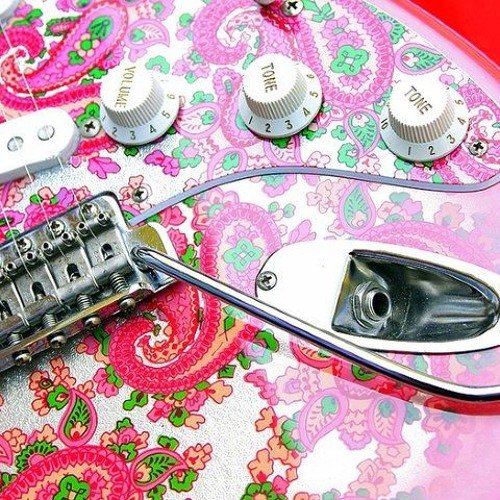
I play a lot of jazz on a Stratocaster. A pink Paisley one, no less. Which probably breaks expectations before a note is even played.
For many people, jazz guitar still carries a very specific image: big hollow body, dark tone, neck pickup, highs rolled off, one carefully controlled sound maintained all evening. And there’s nothing wrong with that sound. It’s beautiful. It’s part of the history. But lately I’ve been wondering whether we sometimes confuse tradition with necessity. Because when you think about what jazz actually is, the Strat starts to make enormous sense.
Jazz, at its heart, is conversation. It’s listening. Reacting. Leaving space. Changing direction in response to what someone else just played.
When that’s happening, sound can’t stay fixed. It has to move. One of the reasons I disappear for hours when playing my Strat is that it constantly asks for engagement. I’m always on the volume and tone controls, shifting colour, softening attack, swelling chords, brightening or thinning the sound depending on what I hear around me.
From a warm whisper to something close to a scream — all without changing guitars, pedals, or settings. Just touch and attention.
The clarity of a Strat does something important for jazz harmony too. Chords don’t blur. Extensions remain audible. Inner voices speak.
Instead of becoming a block of sound, harmony keeps breathing. It feels closer to a piano than to the traditional idea of jazz guitar thickness. And rhythmically, the immediacy of the attack makes time feel alive. Small differences in touch suddenly matter. Placement matters. Intent becomes audible. The guitar responds instantly — which means you have to listen instantly.
Historically, the darker jazz guitar sound made perfect sense. Early amplification demanded control and blend. Guitars needed to sit safely inside acoustic ensembles. But those practical limitations are gone. What remains is expectation. And expectation can be stubborn.
The longer I play, the less interested I am in making instruments imitate one another. A Stratocaster doesn’t need to become an archtop. Its strength is responsiveness, transparency, and movement. Tone becomes part of improvisation itself rather than a fixed identity established before the first tune. From an expressive point of view, that might make it one of the most complete jazz instruments available.
So yes — I play jazz on a pink Paisley Strat. Once the music starts, nobody seems to care what the guitar is supposed to look or sound like. They just listen.
Which, when you think about it, is the whole point.
Little Sunflower by Freddie Hubbard has been my focus this month.
I’ve been part of Matt Warnock’s online jazz study group for a number of years now. Each month we work on a different tune, and at the end of it we submit a performance for feedback—from Matt and from other players in the group. It’s a great process. There are musicians from all over the world involved, and over time you really start to hear how people develop. February’s tune was Little Sunflower by Freddie Hubbard. I love this tune, and I didn’t just want to play the tune from the lead sheet. I wanted to bring something of my own to it.
Depending on how you look at Little Sunflower, the harmony allows D and A to sit almost like drone tones throughout. That became the starting point. I set up a series of drones with swells and stutters, letting them evolve using delay, reverb and tremolo. The oscillation isn’t locked to the tempo—it moves independently—and I like what that does. It adds a sense of movement underneath everything, without being tied down.
I recorded the drones using my looper with an “empty loop” technique, then shaped them further with effects. In places I drop them out completely, just to let the piece breathe.
Everything was recorded in my little room at the end of the house—my music room. Guitar and bass are both me. The drums were part of a backing track provided by Matt for the month’s study (see my article on AI stem separation for more). I wanted to keep the whole thing fairly minimal, real, and feel like a band performance.
The arrangement grew quite naturally. The intro is made up of short chord punches that hint at the B section before moving into the full head. I play the melody in a few different ways—single line and with different harmonies—as this is something I’m submitting to my peers, so I wanted to explore that side of it a bit more.
After that there’s a solo over the form, with each A section getting a slightly different bass treatment. For the head out, the bass takes the melody. When the B section comes around, it starts in a more familiar way, then shifts—first into two-bar phrases, then into one-bar phrases. At that point it starts to feel less like a melody and more like a bass line, which opens things up for a kind of ride-out solo.
Right at the end, bass and guitar come together on the shortened B section.
I recorded and mixed everything myself. The final step was to do the live guitar take with video—one take, no overthinking—and that’s what you see here, and what I submitted.
I’ve built a bit of a reputation in the group for trying different things—textures, sounds, approaches—and for me that’s where the interest is. Just playing the tune as it sits on the page isn’t enough. I think we have to bring more of ourselves to it, and in my case that includes using technology as part of the process, not as a gimmick but as a way of shaping the music.
After submitting this, Matt shared some really kind words about it, which meant a lot given the level of players in the group and how long I’ve been part of it:
“Serge just posted his Little Sunflower Final Project, and it’s a beautiful example of what steady, patient growth can look like over time.
His playing has taken a big step forward. More atmosphere. More intention. More storytelling in the music.
For this project he didn’t just play the tune. He built an environment around it… It’s creative. Thoughtful. And very musical.
One of the things I love most is how Serge keeps experimenting… That curiosity is where real musical growth happens.”
That idea of steady growth, and staying curious, is really what this is all about. I hope you enjoyed it.
In 2024 alone, producers used AI tools to split more than 5,599,384 stems from tracks, which tells us one thing very clearly: this is not a gimmick anymore, it is how people are really remixing and practicing now.
Key Takeaways
Question
Short Answer
What is AI stem separation for remixing and practice?
It is the process of using AI to split a song into stems like vocals, drums, bass, and instruments so you can remix or practice more easily. We then shape those stems with the kind of human focus we talk about in our article on mixing to the musician.
Is AI stem separation good enough for serious mixing work?
Yes, modern models reach state of the art quality, and then proper mastering, as outlined in our mastering guide, can take separated stems to a professional finish.
How can AI stems help me practice my instrument?
You can mute or reduce your own instrument stem and play in its place, just like the way jazz players build solos step by step in our jazz soloing piece.
Can I create DIY backing tracks from my favorite songs?
Yes, AI tools can pull out vocals, drums, bass, and more so you can build custom backing tracks and even full practice albums, similar in spirit to our own Friday’s Child album project.
Is AI stem separation only for EDM and pop remixes?
Not at all, it works for blues, rock, and jazz too, which is why we love hearing classic players like Wes Montgomery through a modern AI workflow.
Do I still need mixing and mastering skills if AI is doing the separation?
Absolutely, AI gives you clean parts, but human taste and judgement are what shape a compelling mix and master, which is the core message across our articles in the Jazz ‘n’ Music section.
1. What AI Stem Separation Actually Is (In Plain Language)
AI stem separation is simply using machine learning to pull apart a full mix into individual elements like vocals, drums, bass, guitars, keys, or even ambience and noise. Instead of begging for the original studio stems, you upload a song file and let the model guess what belongs where, based on millions of patterns it has already learned.
For working musicians and hobbyists, that means you can treat any finished track like a multitrack session again. You get control where you had none, whether you are building a remix, making a practice loop, or just trying to work out what the bass player is actually doing in bar 17.
From full mix to usable parts
Most tools start with the basics, so at minimum you usually get a vocal stem and an instrumental stem. The better platforms go further and split into drums, bass, guitars, piano, and more, which is where things get really useful for both practice and production work.
Modern models reach state of the art quality and use objective metrics like SDR (signal to distortion ratio) to measure how cleanly they separate stems. AudioShake, for example, quotes a vocal model SDR of 13.5 dB on the MUSDBHQ benchmark, and that level of performance is already very workable for serious remixing.
Why this matters to “ordinary” musicians
Most of us do not have access to original studio sessions. For decades we were stuck with stereo mixes and our ears, and if the vocal was too loud or the drummer was washing everything with cymbals, tough luck.
AI stem separation cracks that problem open for the rest of us. It gives the kid in a bedroom, or a veteran player practicing for a gig, the sort of access that only mixing engineers used to have.
2. How AI Stem Separation Works Behind The Scenes
You do not need to be a data scientist to use AI stems, but understanding the rough idea helps you choose tools better. In simple terms, the model has listened to a huge amount of labeled audio and has learned what drums “look” like, what vocals “look” like, and so on, in a very high dimensional space.
When you feed a new track in, it tries to reconstruct the song as a combination of these learned sources. If it has been trained well and is using enough compute, it can get surprisingly close to studio-quality stems, even from a single stereo file.
Quality vs compute: why some tools sound better
On the technical side, newer models like Perseus have improved vocal extraction quality by about 15 percent over older versions like Orion, at the cost of using 3.5 times more resources. That trade off is typical: better separation usually means more computation, which might mean longer processing times or higher subscription tiers.
Some platforms cover as many as 17 or more separate stems, which is great if you want fine control of every element. Others focus on doing fewer stems really well, for example just vocals and instruments, or voice and noise for podcast cleanup.
Why benchmarks and SDR scores matter
Benchmarks such as MUSDB18 HQ or MUSDBHQ give us a common way to compare tools. A model like BS-RoFormer, with an SDR average of 11.99 dB on MUSDB18 HQ, is already competitive, but when you see claims like “Music AI SDR score is 15.8 percent higher than the nearest competitor on average,” that tells you separation is improving fast.
For practical work, the real test is always your ears. Numbers help you pick a starting point, but you still need to listen in context, then decide how much cleanup you are willing to do in your DAW.
3. Why AI Stems Are Perfect For Remixing
Remixing used to mean either you had the official stems or you were wrestling with EQ tricks on a stereo file. AI stem separation changes that because any well mixed track can become raw material, almost like a demo session delivered late at night to your laptop.
In 2024, the most commonly extracted stems were vocals, instrumentals, and drums, which lines up exactly with what remixers reach for first. Strip the drums out, rebuild a groove, keep the vocal, and you are already halfway to something new.
Common remix workflows with AI stems
Pull the vocal stem out and write completely new harmony and chords under it.
Mute the original drums, program your own kit, and keep only the bass and vocal.
Flip things on their head and remix using only the drum and bass stems as a starting loop.
Because platforms like Music AI process over 2.5 million minutes of audio per day with a 99.90 percent uptime guarantee, turnaround is usually quick enough that you can experiment freely. You upload, download the stems, and you are already in the DAW world that we know from traditional sessions.
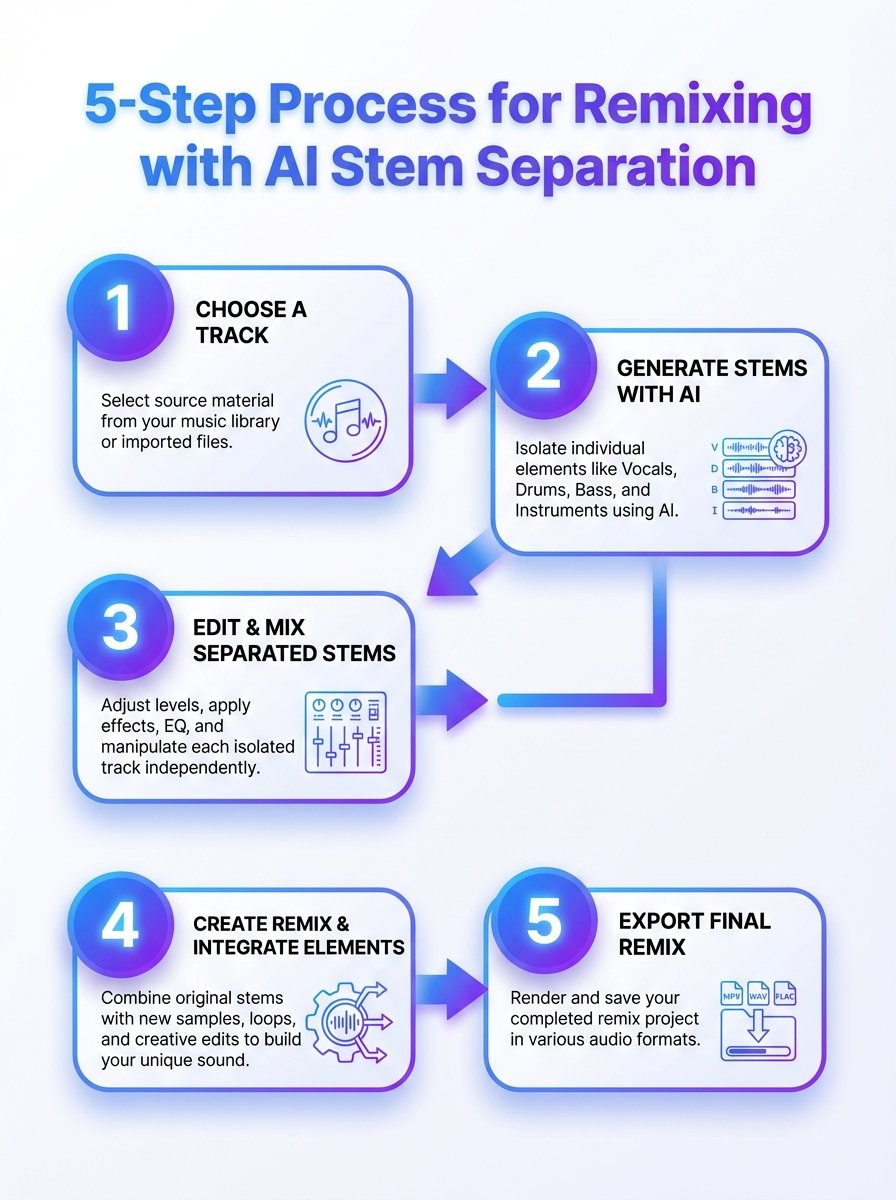
A 5 step AI stem remixing process
A 5-step guide to using AI stem separation for remixing and practice. Learn how stems are isolated and recombined to speed up workflows.
Our own approach for a remix is usually:
Pick a track with a vocal performance that moves you, not just a popular chart tune.
Separate into at least vocal, drums, bass, and “other”.
Audition each stem on its own, listen for artifacts, and clean with EQ or gating where needed.
Rebuild the groove or harmony around the vocal or another focal stem.
Mix with the same care you would give to real session stems, then master at the end.
Did You Know?
Music AI reports a 15.8% higher SDR score than its nearest competitor on average, which means noticeably cleaner stems for your remixes and practice tracks.
4. Building Practice Backing Tracks With AI Stems
For many of us, the real magic of AI stem separation is not the flashy remix, it is the simple ability to practice with the band we always wanted. You can mute your instrument in the mix and sit where that player used to sit, which is a brilliant, slightly terrifying, way to see what you can really do.
Guitarists can pull out the guitars and comp or solo over the original rhythm section. Drummers can remove the drum stem and play along with the intact bass, keys, and vocals, which is very close to a live rehearsal scenario.
Instrument specific practice ideas
Guitar: Remove guitars, loop tricky sections, slow down in a DAW, and study phrasing against the original vocal.
Bass: Solo the bass stem to transcribe, then mute it to test your own line with the drums and harmony.
Drums: Isolate drums to learn fills and ghost notes, then mute to practice your own grooves under the same song.
Vocals: Solo the vocal stem, work on timing and pitch, then sing against the instrumental stem.
This is particularly powerful when you approach soloing the way we describe in our jazz material: making more of what you already do, instead of hunting for magic scales. With stems, you can live in the pocket of a great rhythm section for hours, which is where real progress hides.
Turning albums into practice libraries
Once you get into the habit, you start thinking in albums, not tracks. Entire releases, like our own Friday’s Child, can be turned into structured practice sets where you have clear stems for rhythm, harmony, melody, and solos.
It is the sort of thing that, in the past, only education publishers did with very controlled multitracks. Now you can quietly build your own library at home and work through it at your own pace.
5. Practice Routines Using AI Stems (For Real Life Schedules)
We know what it is like to juggle work, gigs, and training on the bike. Fancy tools are useless if they do not fit into a messy day, so here are simple, repeatable ways to use AI stems without needing a spare lifetime.
The key is to keep things narrow: one song, one weak spot, one short loop, repeated often. AI does the heavy lifting of separation, you just show up and do the reps.
30 minute guitarist routine
5 minutes: listen to the original track once, no guitar in your hands.
10 minutes: loop a verse and chorus with the guitar stem soloed, and quietly sing or tap the rhythm of the part.
10 minutes: mute the guitar stem and play along, recording yourself on your phone.
5 minutes: compare your take against the original guitar stem and make one note for tomorrow.
For bassists and drummers, you can use exactly the same timing but swap which stems you listen to or mute. Vocalists can create A/B loops between the original vocal and their own take against the instrumental stem.
Longer weekend sessions
On days where you have more time, AI stems let you go deeper without getting lost in tech. You can separate a whole album in advance, label stems clearly, and then run longer play along sessions, switching songs while keeping your focus on one concept like time feel or phrasing.
It is the opposite of gear chasing. Once the stems are ready, all you are left with is you, your instrument, and the band that used to live only inside the stereo mix.
Did You Know?
LALAL.AI users uploaded 9.7 million files in 2024, fueling a huge wave of custom remixes and practice tracks built from AI-separated stems.
6. Mixing AI Stems So They Actually Sound Musical
Once you have your stems, the job is not finished, it is just familiar again. You are back in the world of levels, EQ, compression, and, most importantly, the human behind the performance.
In our own work, we always go back to what we call mixing to the musician. Two vocal stems might have the same frequency curve, but one singer is fragile and the other is bold, and they need different treatment if you want the mix to feel honest.
Cleaning up AI artifacts
Even the best models will leave you some work to do. You might hear light bleed from drums in a vocal stem, or a bit of the bass still living in the guitars, especially in dense mixes.
Typical fixes include:
Narrow EQ cuts on obvious bleed frequencies.
Noise gates or expanders on percussive or vocal stems.
Short fades around edits to avoid clicks, especially when looping sections.
Balancing stems like a normal session
After cleanup, you mix as you usually would. Set a solid rough balance, work on the drums and bass relationship, fit the vocal in, then decorate cautiously with effects.
We like to think of AI stems as being like a slightly messy live multitrack. If you maintain that mindset, you focus on musical problems instead of chasing technical perfection that does not really matter to anyone listening.
7. Mastering Tracks That Started From AI Stems
Once a mix feels right, mastering is still essential, no matter how clever the separation stage was. AI does not change the basic truth that mastering is about consistency, translation, and a sensible final polish.
As we explain in our mastering article, the goal is to have a track that sounds balanced and confident on phones, cars, cheap speakers, and a good studio system. AI stems can give you a great mix, but they will not make that last ten percent of finishing decisions for you.
Specific mastering checks for AI stem projects
Low end coherence: Make sure any slight separation smear between kick and bass has not turned into a muddy low end.
Top end harshness: Check that any AI artifacts have not left a “hiss” in the 8 kHz to 12 kHz range.
Phase issues: When stems are recombined, always check mono compatibility, especially with drums and wide guitars.
Loudness is a creative choice, but AI does not get you a free pass there either. We still recommend leaving enough headroom and dynamic range so the track can breathe, even if streaming platforms will normalise it later.
8. Top AI Stem Separation Use Cases For Working Musicians
We see AI stem separation showing up in all sorts of practical, slightly unglamorous ways, which is usually a good sign that a tool is genuinely useful. It is not just bedroom producers, it is teachers, cover bands, and even people preparing for radio or streaming features.
Here are some of the most common use cases we encounter when talking with other musicians.
Everyday uses
Cover band prep: Create key shifted, instrument specific backing tracks for live sets.
Teaching: Build slow, instrument focused versions of songs for students to practice.
Content creation: Prepare short stems for reels or YouTube breakdowns without needing the original session.
Archiving: Pull elements out of old demos and rework them with new arrangements.
For radio features or online premieres, AI stems allow you to make alternate mixes quickly, for example a more voice forward version for spoken intros. When we hear our own tracks on stations or playlists, we are very aware that flexibility counts.
Genre specific workflows
Jazz players might focus on rhythm section stems to study comping under solos. Blues and rock guitarists might live mostly in vocal and guitar stems to pick apart phrasing and bends from players like Peter Green.
Electronic producers might only care about drums and melodic hooks, using AI stems to resample and reshape loops into something completely unrecognisable from the source.
9. Limitations, Legal Questions, And Good Habits
AI stem separation is powerful, but it is not magic, and it does not remove your responsibility to think. There are technical limits and legal questions that every musician should at least be aware of.
On the technical side, extremely dense mixes, live recordings, or tracks with heavy effects can still confuse models. You might get more artifacts or bleed, and sometimes it is genuinely quicker to pick a cleaner song.
Legal and ethical points
We are not lawyers, so we will not pretend to offer formal advice here, but some broad principles are sensible:
For private practice, pulling stems from commercial tracks is generally low risk, and similar to playing along with a record.
For commercial remixes or releases, you still need the relevant permissions or licenses, regardless of how you got the stems.
For teaching content, many creators work under fair use or similar concepts, but local laws differ, so it is worth checking.
Ethically, it helps to remember there is a person behind every performance, just like we write about in our mixing article. Respect for that person’s work should guide how loud you shout about your AI separated stems in public.
10. Choosing An AI Stem Separation Tool That Fits You
There are plenty of tools out there, and new ones keep appearing, but you do not need to overthink it. Start with what you actually want to do, which is usually remix tracks, build practice material, or clean up audio for teaching and content.
Key questions to ask yourself include how many stems you need, how patient you are with processing times, and whether you want a web tool or something that runs inside your DAW.
Features that matter in daily use
Stem count: Do you just need vocals and backing track, or do you want drums, bass, guitars, keys, and more?
Quality: Look for clear examples and, if possible, references to benchmarks like SDR or independent tests.
Speed: Daily throughput numbers such as “2.5 million minutes per day” hint at how scalable a platform is.
Workflow: Simple export options into your DAW, clear file naming, and stable uptime all save you time.
Remember that you can always change tools later. The bigger decision is not which brand you pick, it is whether you commit to using AI stems as a regular part of how you practice, remix, and learn.
Conclusion
AI stem separation for remixing and practice is not science fiction anymore, it is just another tool in the bag, like a decent compressor or a metronome that does not argue. Millions of files and stems processed each year prove that ordinary musicians, teachers, and producers are already using it quietly in the background.
From our point of view, the real value is simple. AI helps you hear more clearly, gives you better material to work with, and then gets out of the way so you can do the one thing it still cannot do, which is to sound like you.
I was lucky enough to get paid to play a recording session yesterday at a local studio here in France, for visiting American songwriter and producer Dana Walden.
If anyone would like to know more — how I got the work, how I prepared, what gear I took, how it actually went — please ask and I’ll do my best to answer. Needless to say, it was a fabulous day, and I consider myself very fortunate.
There were two key takeaways I wanted to share:
1. You must be able to play in all keys. I had to play a song in three different keys straight off, to find which suited the singer best. Luckily it was a simple pop song, but the ability to move freely between keys was essential.
2. Ear training pays off. Dana wanted a short guitar intro and asked me to play him some ideas. He liked a couple of things I played. Then he sang a line to me and asked me to play it back. I was so glad I had worked through those ear training exercises.
How it went…
I met Dana the day before. He wanted to meet and talk through the project, and he was really nice, so I didn’t feel nervous. We were only recording one tune that day — just him, the chanteuse, and me.
Knowing the song ahead of time meant I was able to work out some nice chord voicings and pathways, while still leaving plenty of scope to improvise. Dana was clear about what he wanted and told me when he liked something and wanted more of it.
Style-wise, I’d assumed it was going to be jazzy — that’s why the woman who booked me had booked me — but Dana wanted a more pop approach.
On the day, the engineer was set up and ready when I arrived. I sat in the control room and plugged straight into the desk, playing to a drum track with some piano parts the producer had prepared that morning. I played from the notes I’d made the day before, while Dana sang a placeholder vocal and conducted me through the arrangement.
I put down a couple of takes using different ideas. When the singer arrived we had a few more run-throughs, then the producer asked me for a final take — just embellishments and fills. After a couple of hours, my work was done. The rest of the session belonged to the singer.
One small thing I hadn’t anticipated: I’m used to a two-bar count-in, but the studio DAW was set up for just one bar. That caught me out on the first take! Afterwards I found myself thinking about how much studio time that must save over the course of a few months.
Hopefully I’ll get a copy of the finished track when it’s done.
How I got the gig…
I’m not a working professional musician. Being a professional musician in France is complicated — the rules are quite something. On paper, I’m retired.
I got this gig by being in the right place at the right time. I’d done a short gig with Lyda, my Dutch opera singer friend, and the woman who booked me happened to be in the audience. She loved what we did and got in touch — she was looking for a guitarist, she liked what I played, and she showed some of my YouTube videos to the producer. He thought I was worth a try. I was halfway there before the session even began.
On my morning walk yesterday, something clicked. I was thinking about an upcoming concert I’m organizing for a friend—a singer, with hired musicians, mp3s to learn from—and I found myself anticipating all the little moments where things wouldn’t be perfect. Where someone would need help navigating a tricky change. Where the band would need to function as a safety net, not just a backing group.
That’s when I remembered the phrase: hand holding.
Not in a condescending way. More like the quiet, generous act of helping someone—or being helped—through a tune in real time. And as I walked, I realized something odd: in 50 years of playing guitar and 15 years of serious jazz study, I’d never heard anyone actually talk about this.
The Silent Skills We Never Name
We talk endlessly about scales, voicings, comping patterns, and phrasing. We analyze solos, transcribe lines, and work through Real Books. But the subtle art of keeping the music together when things aren’t perfect? That lives in the shadows.
Yet it’s happening constantly. Visual cues—a nod, eye contact, the angle of your guitar neck pointing toward the next section. Physical signals—a bassist’s head bob on beat one, a pianist’s shoulders lifting before a key change. And musical cues—walking up chromatically to telegraph where we’re going, voicing a turnaround more clearly when you sense someone’s lost, creating tension that signals release is coming.
This is the connective tissue of live performance, especially in jazz where so much happens in the moment. But somehow, it’s treated as something you just “pick up along the way” rather than a skill worth discussing, let alone teaching.
Two Moments That Brought This Home
The concert prep was one trigger. I’ve hired good musicians, and I’ll send them charts and recordings. But I know from experience they won’t have every tune locked down perfectly. Someone will miss a turn. Someone will hesitate at a bridge. And in those moments, the band needs to be ready—not to judge, but to guide.
The second moment was more recent. I was playing with a drummer—a great drummer—who’s lost some hearing after decades of loud gigs. I found myself instinctively adjusting. Playing with a more defined tone. Making my phrasing more obvious. Not dumbing things down, but creating clearer landmarks for him to navigate by.
“Playing with a more defined tone. Making my phrasing more obvious. Not dumbing things down, but creating clearer landmarks to navigate by.”
And as I did this, I realized: nobody taught me this. I learned it by playing with people who did it for me when I needed it. By watching how generous players supported the music rather than just showing off their own skills. By being rescued, and eventually learning to rescue others.
Taking the Risk
After that walk, I felt like I’d stumbled onto something worth discussing. So I posted about it in the private study space my jazz tutor runs—a forum where his students share ideas and experiences.
I’ll be honest: I was nervous. Sticking your head above the parapet always feels vulnerable, especially when you’re naming something that doesn’t seem to have a name. What if everyone thought, “Well, obviously—why are you even bringing this up?” What if nobody responded at all?
But I posted it anyway. Described the hand holding concept, the two situations that prompted it, and asked if anyone else had thoughts on this unspoken aspect of playing together.
The Response That Validated Everything
My tutor’s response was better than I could have imagined. He called it “a really perceptive observation” and said I was right—it’s almost never taught explicitly. He wrote:
“What you’re describing is musicianship beyond notes. It’s the quiet language that keeps the music moving when things aren’t perfect—which, of course, is most of the time in real playing situations.”
He loved the phrase “hand holding” because it captured the spirit perfectly. Not control. Not correction. Support.
Then he added something that really hit home: “That’s not ‘dumbing things down.’ That’s taking responsibility for the music.”
When I adjusted my playing for the drummer with hearing loss, I wasn’t compromising my musicianship—I was using it in service of the collective result. That’s a fundamental shift in perspective: from “what do I want to play?” to “what does the music need right now so we can stay together?”
“That’s not ‘dumbing things down.’ That’s taking responsibility for the music.”
Living in the Cracks
My tutor explained why this skill rarely gets taught: it lives in the cracks between the things we do teach. It’s not theory. It’s not technique. It’s not repertoire. It’s awareness.
You learn it by playing with people, making mistakes, being rescued, rescuing others, and slowly realizing—as he so beautifully put it—that “clarity is kindness on the bandstand.”
Think about the moments that stay with you. Someone walking you into a bridge with a clear bass line. A pianist playing a louder chord on beat one when they sense you’re drifting. A horn player shaping a phrase so clearly that the form suddenly makes sense again. Those aren’t flashy moments. They’re generous ones.
What This Means for How We Play
After 50 years of playing, I’m still discovering layers to this craft. And what strikes me about this particular insight is how fundamental it is. We spend so much time developing our individual voice—our tone, our vocabulary, our improvisational chops—but jazz is ultimately a conversation. And in any good conversation, you’re not just expressing yourself; you’re listening, responding, and sometimes gently guiding.
The players who keep the music together aren’t necessarily the ones with the fastest fingers or the hippest lines. They’re the ones who:
Play with clearer phrasing when needed
Create more obvious harmonic motion at crucial moments
Maintain a stronger time feel to anchor everyone else
Use slightly exaggerated cues in sound and body language
These aren’t tricks or shortcuts. They’re acts of musical leadership and care.
Still Learning After All These Years
What keeps jazz endlessly fascinating—even after five decades—is that there’s always another layer to discover. Just when you think you’ve got a handle on the music, you realize there’s this whole dimension of unspoken communication you’ve been participating in without fully seeing it.
My tutor suggested this could be an ongoing conversation in the study group, because while we may not be able to “teach” it in the traditional sense, we can learn to notice it, name it, and value it.
I think he’s right. And I think it starts with recognizing that supporting your fellow musicians—hand holding, if you will—isn’t a beginner skill you outgrow. It’s an advanced form of musicianship that deepens the more you do it.
The next time you’re on the bandstand and you catch yourself walking up to a change more obviously, or nodding toward the turnaround, or voicing that chord progression a little more clearly—recognize what you’re doing. You’re not holding the music back. You’re holding it together.
And that might be the most important thing we do.
Have you experienced moments of musical hand holding—either giving or receiving support on the bandstand? How do you think about this unspoken dimension of playing together? I’d love to hear your thoughts in the comments below.
I spotted some mastering tips from top multi-platinum producer Warren Huart. I’ll post those below, but before I do, it got me thinking…..what is mastering, what’s the goal, why do we need to do it?
Well, the goal of mastering an audio track is to ensure it sounds polished, balanced, and consistent across all playback systems. It is the final step in the music production process, refining the mix to meet industry standards before distribution. The sprinkling of the fairy dust.
Here’s why it’s done…
Consistency Across Playback Systems – Mastering ensures the track sounds good on different systems (headphones, car speakers, club PA systems, etc.).
Loudness Optimization – Brings the track to a competitive volume while maintaining dynamics and avoiding distortion.
EQ and Tonal Balance – Corrects any frequency imbalances to ensure clarity and cohesion.
Dynamic Control – Subtle compression and limiting ensure the track has impact without being over-compressed.
Stereo Enhancement – Adjusts stereo width to create an immersive listening experience.
Track Sequencing (for albums/EPs) – Ensures smooth transitions between tracks and maintains a cohesive feel.
Format and Distribution Readiness – Prepares the track for streaming services, vinyl, or CD with appropriate loudness and encoding.
Even with a great mix, mastering is crucial for giving a track its final professional touch and making it competitive in the market.
Here’s Warren’s top ten tips…..
Start with a Well-Mixed Track. Mastering cannot fix a poor mix. Ensure your mix is balanced, with proper EQ, dynamics, and stereo imaging before mastering.
Use the Highest Quality Audio File Possible (Please No MP3!). Always master from a 24-bit or 32-bit WAV or AIFF file with at least 44.1 kHz sample rate. Never use MP3s or other lossy formats, these degrade sound quality and reduce mastering effectiveness.
Set Proper Headroom. Leave -6 dB to -3 dB of headroom in your mix to prevent clipping when mastering.
Use Subtle EQ Adjustments. Use a linear-phase EQ to correct any minor tonal imbalances. Avoid extreme EQ boosts or cuts—small adjustments (±1-2 dB) go a long way.
Control Dynamics with Compression
Use gentle compression (Ratio 1.2:1 to 2:1) to smooth out dynamics. Apply parallel compression if you need more punch without squashing transients.
Check and Maintain Stereo Balance. Use a stereo imager to ensure width is natural, avoiding excessive widening that may cause phase issues. Keep low frequencies (below 150 Hz) in mono for a solid bass foundation.
Reference Your Track Against Professional Mixes. Compare your master with similar songs in the same genre to match tonal balance, loudness, and stereo width.
Check on Multiple Playback Systems. Test your master on studio monitors, headphones, phone speakers, car speakers, and club systems to ensure consistency.
Take Breaks & Trust Your Ears. Avoid ear fatigue by taking breaks every 30-45 minutes. Mastering should be done at moderate levels (around 75-85 dB SPL) to prevent biased decisions.
All great tips. The stand-out ones for me are… #8. I think using a reference track is essential. Choosing the right one is another thing in itself. #9, yep, you gotta check it on everything you can, car, phone, tablet, Hi-Fi, PC the lot. #10 trust your ears. Yes, but know your ears! I’ve found that as I’ve got older my ears can’t be trusted. I always have to take extra care with the top end because it’s harder for me to hear. I usually get Carla to check it, she has fantastic ears.
Yes, it’s true, I’m gonna be on a radio show in St John’s Newfoundland Canada. Not me in person, but some of my music. I’m hoping it will go out before Christmas. As soon as I know. So will you!!! The radio station is VOWR 800AM and the show hosted by Rayna is ‘The Unsigned Radio Hour’, and it features unsigned musicians from all over the world. The show goes out at 10pm on a Monday local time.
Here’s the skinny on the 100 year old radio station… VOWR broadcasts from studios located in Wesley United Church in St. John’s, NL. The stations’ first broadcast occurred on July 20, 1924, when Newfoundland was a country onto itself and some 25 years before confederation with Canada.
The founder of VOWR was the Referend Dr. J.G. Joyce, Minister at Wesley United Church (then Wesley Methodist Church) from 1922 until 1930. Reverend Joyce was a native Newfoundlander, born in Carbonear, Newfoundland in 1889.
The station had its inaugural broadcast in July, 1924, just 23 years after Marconi received the first wireless signal at historic Signal Hill, located adjacent to the mouth of St. John’s Harbour.
If you’re looking for ways to make my jazz guitar soloing more rich by making more of what you already know and do? Here’s some suggestions.
1. Explore Harmonic Extensions and Tensions
Add 9ths, 11ths, and 13ths: Use chord extensions to create more colorful solo lines. If you know a basic chord shape or arpeggio, try adding a 9th or 13th to your lines.
Use Tensions (b9, #9, b13, etc.): Adding these over dominant chords creates more tension and a sense of movement toward resolution.
2. Chromatic Passing Tones and Enclosures
Chromaticism: Slip in chromatic notes between chord tones to add more fluidity and complexity. This works especially well in jazz where tension and release are central to the style.
Enclosures: Approach target notes by playing notes above and below them chromatically before landing on the target. This adds a bebop flavor to your lines.
3. Rhythmic Variation
Syncopation: Vary the rhythm by playing off the beat or using unexpected accents.
Polyrhythms: Experiment with rhythms that contrast with the underlying groove (e.g., playing 3 against 4).
Space and Phrasing: Use more rests and give your phrases room to breathe. This can make even simple ideas sound more profound.
4. Use Motifs and Develop Them
Motif Development: Take a simple melodic idea (motif) and develop it throughout your solo by repeating it with variations in rhythm, note choice, or phrasing.
Call and Response: Play a motif (the “call”) and answer it with a contrasting phrase (the “response”). This creates a conversational quality to your solo.
5. Arpeggio Superimposition
Superimpose Arpeggios: Use arpeggios from related chords over the underlying harmony. For example, over a G7 chord, you could play arpeggios from G7, Bm7b5, or Dm7 to outline different harmonic textures.
6. Chord Substitutions
Triad Pairing: Use two triads over a dominant or tonic chord to create harmonic tension. For example, over a Cmaj7, use G and D triads for a fresh sound.
Tritone Substitution: Solo as if playing over the tritone-substituted chord. For example, over a G7, you could superimpose lines from a Db7 arpeggio or scale.
7. Altered Scale and Modes
Altered Scale: Over dominant chords, use the altered scale (7th mode of melodic minor) to add tension and chromaticism.
Mixing Modes: Take advantage of different modes over chords. For instance, instead of always playing the major scale over major chords, try Lydian (raise the 4th) or even Dorian.
8. Double Stops and Intervals
Use Double Stops: Playing two notes at once, especially 3rds, 6ths, or 4ths, can thicken your sound and add harmonic interest.
Intervallic Soloing: Try basing your lines on larger intervals like 4ths or 6ths to break away from scalar patterns.
9. Diminished and Whole Tone Ideas
Diminished Runs: Use diminished arpeggios and scales to create tension, especially over dominant chords. Since diminished scales are symmetrical, they’re great for quickly moving up and down the fretboard.
Whole Tone Scale: Over augmented or dominant chords, the whole tone scale offers a dreamy, unresolved quality that adds a modern edge.
10. Use Different Pick Techniques
Hybrid Picking: Mix fingerstyle with picking to create more dynamic texture in your lines.
Economy Picking: Improve the smoothness of your phrasing by using economy picking to reduce pick hand movement.
11. Octave Lines (à la Wes Montgomery)
Play lines in octaves for a richer, fuller sound. It also forces you to slow down and be more deliberate with your note choices, adding a lyrical quality to your soloing.
12. Explore the Guitar’s Full Range
Play Across the Neck: Don’t just stay in one area of the fretboard. Use vertical and horizontal movement to fully utilize the guitar’s range, making your solo sound more dynamic and interesting.
13. Utilize the Blues Scale Tastefully
You probably already know the pentatonic and blues scales. Even in jazz, a well-placed bluesy phrase adds depth to a solo, especially over dominant chords.
By focusing on these elements, you can add new layers of complexity and richness to your jazz solos without needing to learn entirely new material. Experiment with combinations of these techniques in different contexts to find what works best for your style.
This is Peter Green.You may not recognize him today — he looks a lot different from the way he did in 1967, when at the age of 20 he became the founder and frontman for what would become one of the most successful and enduring acts in music history.
But when the band he created was selling millions of albums and playing to packed arenas, Green was long gone — destitute, homeless, and quite mad.
Peter Green had been a rising star in Britain’s blues revival of the 1960s. His guitar playing caught the attention of Bluesbreakers frontman John Mayall, who let the teenage Green sit in with the band when lead guitarist Eric Clapton was unavailable. When Clapton eventually left to form Cream, Mayall gave the job to Green, predicting that within a few years he would eclipse Clapton as England’s greatest blues guitarist.
After a year with Mayall, Green was eager to front his own band. He poached two of his Bluesbreakers bandmates, Mick Fleetwood and John McVie, enticing them to join by naming the band Peter Green’s Fleetwood Mac.
The band, which played a mix of blues standards and original compositions by Green, enjoyed overnight success. Behind Green’s soulful voice and raw, authentic guitar playing, their debut self-titled album, Fleetwood Mac, spent 37 weeks on the UK charts, and was the fourth best-selling album of the year. Green would quickly mature as a songwriter, charting with such compositions as Black Magic Woman (later a major hit for Santana) and the instrumental Albatross, which shot to No. 1.
As their fame and popularity increased, Green’s bandmates began to notice changes in his behavior. On a tour of Europe in 1970, Green abruptly left for several weeks to join a German commune where he ingested large quantities of LSD. His erratic behavior had intensified; he grew a beard and began wearing long robes and crucifixes, and spoke of his desire for the band to give away the money they’d earned. His compositions around this time became increasingly darker, as evidenced in his song The Green Manalishi (with the Two Prong Crown):
“Now, when the day goes to sleep and the full moon looks The night is so black that the darkness cooks Don’t you come creepin’ around – makin’ me do things I don’t want to Can’t believe that you need my love so bad Come sneakin’ around tryin’ to drive me mad Bustin’ in on my dreams – making me see things I don’t wanna see“
Two months after his stay at the German commune, Green left Fleetwood Mac. He released a solo album the following year as well as sessions with B.B. King, and then faded into obscurity.
Broke and unable to care for himself, he moved into the home of his brother and sister-in-law, who encouraged him to seek psychiatric treatment. He was diagnosed with schizophrenia in the late 70s and began a long road to recovery. He was given anti-psychotic drugs which managed his symptoms, but according to Green, caused a complete loss of interest in music. So for the next several decades he went on and off the medication, a struggle which lasts to the present day.
He formed the Peter Green Splinter Group in 1997. The band released nine albums over the next eight years until Green abruptly disbanded the group.
He lives today in comfortable retirement in the south of England, looked after by close friends. Mick Fleetwood visited him several years ago and described the bittersweet day: “He’s still warm and kind, but otherwise he’s not the man I knew, clearly.”
It’s unclear whether the LSD Green took triggered his underlying schizophrenia or merely exacerbated it, but one thing seems clear: had he remained healthy, Peter Green would likely have become one of the most influential recording artists of all time.
Sadly, many people who read this post have probably never heard of him.
My 2004 (Crafted in Japan) Fender Stratocaster. I bought it 2010 from John Blackman of Far East Guitars who specialized in Fenders from Japan. The photos here are from John’s website, this was the first time I saw her, and fell in love! John retired around 2015. His website is no longer there. 🙁 I’m playing over a 12/8 Fusion Shuffle Jam Track in C minor. You can find the jam track on @BensJamTracks here…. https://youtu.be/ft9Y907Gs6U?si=D_XGxxjGXH1Un9mA