There’s a thread on a Strat forum I’ve been part of for more years than I care to count. Every week, someone posts a backing track. The rule — if you can call it that — is simple: you play over it. Whatever it is. Whatever style. Whatever key centre it seems to inhabit. You don’t wait until it suits you. You just play.
I’ve been doing this for a long time now. Long enough that if I tried to calculate the number of tracks, the number of takes, the number of moments where I had absolutely no idea what I was doing, the number would be embarrassing in the best possible way.
And somewhere in all of that, I stumbled onto something I’ve been trying to articulate ever since.
We talk a lot about intention in music. The idea that you should know what you’re going to play before you play it — that great soloists have a plan, a narrative, a destination in mind when they open their mouth or press a string. There’s truth in that. Intention matters. Aimless noodling is its own kind of noise.
But intention has a shadow side. When I am too intentional — when I arrive at a backing track already knowing what I want to say — something closes down. I stop listening. I stop responding. I execute rather than explore. The music becomes a delivery mechanism for an idea I already had, rather than a conversation with something alive.
The weekly discipline taught me something about this. Because you can’t always be prepared. Some weeks the track is a slow blues and you feel settled. Other weeks it’s some lurching odd-time thing and you don’t know where the one is. And in those moments of genuine disorientation, something interesting happens: you have to find something rather than retrieve it.
That’s where accident comes in.
I don’t mean accident in the sense of mistake, though mistakes have their role. I mean the small collision between what you intended and what actually emerged — the note that wasn’t the note you aimed for, but turned out to be better. The phrase that surprised you as you played it. The moment where your fingers went somewhere your conscious mind hadn’t sanctioned, and it worked.
Those moments don’t come from nowhere. They come from years of practice, absorbed and half-forgotten, bubbling up without permission. But they also require a particular quality of openness — a willingness to not clamp down on the unexpected when it arrives.
The weekly forum discipline created exactly that condition. The pressure to produce something — anything — week after week stripped away the luxury of overthinking. You couldn’t afford to wait for inspiration. You had to show up, press record, and deal with whatever happened.
And what happened, often enough, was something better than what I’d planned.
I think about entrances a lot. How you begin a solo over a moving backing track is one of the most revealing things about a player. Do you wait for a landing point — the top of the form, a predictable resolution — before committing? Or do you enter mid-stream, trusting yourself to find the thread?
The players I most admire — and I’m thinking of people like Bill Frisell, who seems to exist in a state of perpetual gentle accident — don’t appear to need a clean runway. They arrive. They’re already in the middle of a thought when you hear them. The music was already happening before they joined it, and somehow they were always already part of it.
That’s not recklessness. It’s a kind of earned surrender — the product of so much intention, so many hours of deliberate practice, that intention itself becomes transparent. You stop being aware of it. You just play.
I’m a cyclist as well as a guitarist, and I’ve noticed the same dynamic on a bike. The races I remember most vividly are not the ones where everything went to plan. They’re the ones where something went wrong and I found a response I didn’t know I had. A gap appeared, or the pace lifted at the wrong moment, or the weather turned, and instead of consulting a plan I simply acted. And sometimes — not always, but sometimes — what I did was exactly right.
You can’t manufacture those moments. But you can create conditions in which they’re more likely to happen: consistent practice, genuine pressure, and the habit of showing up whether you feel ready or not.
The weekly forum thread is that, for me, on guitar. A small, low-stakes arena that has, over years, done more for my playing than almost anything else I can think of.
I said earlier that I’ve been trying to articulate this for a long time. The title I’ve landed on — Between Intention and Accident — feels like the right address for the idea. Not intention. Not accident. The territory between them, which is where, I think, most of the interesting music actually lives.
If you have a discipline like this in your own practice — something you return to week after week, not because it’s always comfortable but precisely because it isn’t — I’d be curious to know. And if you don’t, perhaps it’s worth finding one.
The backing track will be different next week. That’s the whole point.
I was watching a fellow guitarist playing a version of Girl from Ipanema this week — a tune we’ve all been working on together this month. He’s a capable player, but he always reaches for the complicated solution. Things that are beyond him, played with obvious effort, the joins showing. I found myself wondering why. Why make it harder than it needs to be?
It struck me that we are complete opposites.
My instinct, increasingly, is to simplify. To find the least amount that still does the job. Two notes instead of five. A silence held a beat longer than it should be. A chord left to ring until it starts to tell a different story.
That instinct didn’t arrive fully formed. There was a specific moment.
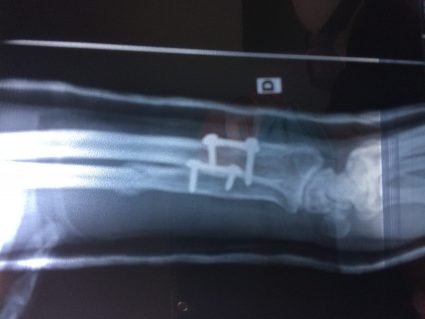
A couple of seasons ago I broke my right arm. Badly enough to spend a good stretch in a cast. And because I am who I am, I still picked up the guitar — carefully, awkwardly, with considerably less available to me than usual. You can’t attack anything with a broken arm in a cast. You can barely hang on.
So I didn’t attack. I played what I could reach. Slowly, with gaps. And somewhere in that enforced restraint I found something I hadn’t expected to find: I liked it. Not just in a “making the best of it” way. Genuinely liked it. I liked the idea of letting something be there slightly longer than it should. A note. A silence. A chord sitting in time and space until it either resolved naturally or started to drift outside of its original intention — starting to clash, starting to become something else. That tension between the thing you placed and the moment it begins to turn. There’s music in that gap.
The broken arm didn’t teach me technique. It taught me patience. It taught me that the guitar doesn’t need you to fill every available moment with something. Sometimes the most interesting thing you can do is put something down and then leave it there, and see what happens. I think about the player I was watching. The complexity is its own kind of effort — a constant forward motion, always reaching for the next thing. There’s nowhere to stop. But stopping is where a lot of the feeling lives.
The cast came off. The arm healed. But I kept the lesson.
Less isn’t a compromise. It’s a choice. And sometimes it’s the harder one — because there’s nowhere to hide in a two-note voicing, a long silence, or a chord that you’re willing to let become something unexpected.
There’s a particular feeling that jazz gives you, unlike any other music I know. The deeper you go, the more there is. You learn something, truly learn it, and instead of the horizon getting closer it recedes further into the distance. It can feel vertiginous at times. Overwhelming even. And yet you always want to keep going.
This is not a bug. It’s the whole point.
But here’s where a lot of people come unstuck. There’s a common assumption — especially among self-taught musicians — that learning to play is a destination. You put in the hours, you acquire the skills, and at some point you can play. Ticket punched. Job done. What nobody tells you is that the ticket has no destination printed on it.
This is precisely where a tutor, a mentor, a musical confidant becomes not just useful but essential. And I’d argue that’s true at every level — beginner or fifty years in.
A good tutor doesn’t just correct your technique or hand you new material to learn. They see you clearly. They spot the comfortable habits you’ve stopped noticing, the safe ground you keep returning to without realising it. They know where you are in the journey, and they know how to nudge you somewhere new. Sometimes that nudge is a single idea that opens up a whole new stretch of horizon.
The ego is the enemy here of course. The further along you are, the easier it is to feel you’ve earned the right to go it alone. But I’d argue the opposite: the more you know, the more you need someone who can see past what you know. Someone who can say — keep going, you haven’t run out of road yet.
Jazz is an oral tradition. It was never meant to be learned alone. It was passed from player to player, on bandstands and in back rooms, through relationships as much as through music. A tutor keeps that spirit alive, whatever your level, whatever your age.
The horizon keeps moving. That’s the gift. Find someone who helps you walk towards it.
And here’s the thing nobody mentions when you start out: the journey will teach you far more than just music. Patience, humility, the courage to sound bad before you sound good, the ability to sit with uncertainty and keep going anyway. Jazz in particular has a way of holding a mirror up to who you are. How you handle frustration. How you respond to surprise. Whether you can let go of what you know in order to find something better.
A life spent with music, and with the right guide alongside you, is a life spent learning how to be more fully human. That’s not a bad return on a few hours of practice.
On jazz, bicycles, and the art of mischievous friction
There is a particular quality of thinking that happens on a long bicycle ride through a forest. The rhythm of the pedalling, the canopy overhead, the absence of interruption — it creates a space where ideas can unspool at their own pace. Last week, riding through the forest of Rochechouart, I found myself turning over a question I have been turning over for years without ever quite stopping to examine it directly. What actually is improvisation? And could it be considered spontaneous composition?
aimlessly drifting along…
The Case for Spontaneous Composition
The framing holds up reasonably well on first inspection. When you improvise, you are making all the same fundamental decisions a composer makes — melodic shape, rhythm, harmonic choice, tension and release, silence. The difference is the timescale. A composer can revise; an improviser commits in real time. But the act of musical decision-making is structurally identical. There is also the question of what improvisation actually draws on. Nobody improvises from nothing. You draw on internalised vocabulary, patterns, emotional states, the harmonic landscape under you, what the other musicians just played. In a sense, the composition happened over years of practice. The spontaneous moment is more like retrieval and recombination than pure creation from nothing — though that is arguably true of written composition too. But the framing gets complicated quickly. Composition usually implies some intention toward a fixed, repeatable object — a piece that exists independently of any one performance. Improvisation is inherently ephemeral and relational. It is shaped by the room, the rhythm section, a moment of hesitation from the bassist. That responsiveness is its most distinctive quality, and the word composition does not quite capture it.
Pre-loading the Stance
Thinking about this on the bike, I arrived at a description of my own practice that felt more honest than either composition or conversation. Sometimes I set out on a tune with an intention. Not a musical intention in the technical sense — not a plan for which scales to use or which substitutions to make. Something more like a dramatic premise. I might think: I am going to clash the hell out of this one. I am going to argue my way through it. That is how I feel today. And then I just play. What I am doing in that moment is pre-loading a stance. I am not pre-composing notes, I am pre-loading an attitude, an energy, a posture. The music then finds its own way through that filter. Two distinct layers operate simultaneously: the intentional layer, which is the mood or the argument I have chosen to bring; and the spontaneous layer, the actual notes and phrases that emerge in real time but have been given a direction to flow in. It is a bit like the difference between deciding how you are going to walk into a room versus the actual steps you take. The character is chosen; the choreography just happens. What strikes me about this is how physical and emotional it is before it is musical. You are not thinking about flattened ninths and rhythmic displacement — you are thinking: I am restless, I want friction. And then years of vocabulary serves that feeling without you having to consciously direct it. At a certain level of musicianship, technique becomes almost transparent. A clear medium through which something pre-verbal gets expressed.
Mischievous Friction
I would say — I do not always want to win the argument. Sometimes I just want to create some mischievous friction. That is actually a more interesting goal than winning, because winning implies a conclusion, a resolution. Friction that is genuinely mischievous stays alive. It does not resolve; it keeps the listener slightly off-balance, slightly unsure whether what just happened was intentional or whether you are about to fall over. That ambiguity is the point. For this to work, though, you need the right response from around you. If you are there trying to start a musical argument and the band is all peace and love, you are done. That is where the card up the sleeve comes in — the back-pocket contingency. Not just one pre-loaded attitude but a small repertoire of them. If the argument is not landing, you shift. Instead of clashing head-on, you go quiet and sardonic. You let the peace-and-love wash over you and then drop something slightly unsettling underneath it. Some tunes hand you more cards than others. Donna Lee, for example — lots of cards, but it is a tight fit shirt. The changes move so fast and so purposefully that there is not much room to lounge around in. And yet that constraint might actually serve the mischief rather than prevent it. When everything around you is that disciplined, even a small deviation stands out sharply. The tightness of the shirt makes every wrinkle visible. The tune becomes your straight man.
The Cyclist in the First Five Minutes
The best co-conspirators for this kind of playing share certain qualities. They have to be at ease and comfortable — because if someone is anxious about their own playing, all their attention is turned inward. They are managing themselves, not listening outward. There is no spare bandwidth for catching a wink across the room. They have to be confident — and this is separate from ability, which is an important distinction. A highly able player who is insecure can be the most rigid of all. They have the most to protect. Whereas someone with less technical firepower but a settled sense of who they are musically can afford to take risks, to go somewhere unexpected, because they are not worried about being exposed. And they have to be listeners. Because mischief in music is essentially a signal sent to another person. If they are not listening with that particular alert, open quality, the signal just goes into the air and disappears. The remarkable thing is that you can often spot all of this before a note is played. Just in how they set up, how they handle their instrument when nobody is officially listening yet. Whether they noodle with genuine curiosity or just run scales to fill the silence. Whether their eyes are open or closed to what is around them. It is exactly like going for a bicycle ride with someone new. You can tell within the first few minutes whether they know how to ride or not. Not from how fast they go or how fit they look — something in how they sit on the bike, how they handle the first corner, whether they are fighting the machine or simply in it. What you are reading in both cases is the same thing: confident familiarity. A relationship with something they have absorbed deeply over years. At a certain point it stops being a skill you perform and becomes a way you inhabit something. And the people who have it share one defining quality — they have no need to prove it. The moment you are proving something, you have introduced an audience into your head. You are no longer just doing the thing; you are watching yourself do it and managing how it looks. That internal observer is deadly to real presence.
Back Where We Started
I rode back into the village having gone around the question without quite answering it — which feels about right. The best loops do that. You arrive back at the start and it looks the same, but you are not quite the same for having gone round it. Improvisation is not spontaneous composition, not exactly. It is something more relational, more alive than that — shaped by the room, the other players, the particular quality of attention in the moment. But at its best, when the stance is pre-loaded and the right co-conspirators are in the room and the tune is handing out cards, it achieves something that written composition works very hard to simulate. It sounds like someone who has no need to prove anything at all.
I think AI is having a genuinely good effect on jazz music!
There’s a lot of anxiety around AI in music at the moment, and jazz is no exception. In fact, if anything, the reaction from jazz musicians tends to be particularly negative.
I understand why. Jazz is deeply human music. It’s about interaction, identity, listening, and presence in the moment. The idea of something artificial stepping into that space feels, at best, uncomfortable.
But I think it helps to separate two very different ideas: AI as a performer, and AI as a tool.
As a tool, I believe AI is already having a genuinely positive effect on jazz—and on how we learn it.
In a previous article, I wrote about using AI for stem separation, and how useful that can be for practising musicians. Being able to take a recording and isolate exactly what a pianist is doing with their left hand, or hear clearly what the bassist is playing under a busy head, simply wasn’t possible before. If you want to play along with some of the greatest musicians who ever lived, properly isolated, it’s an extraordinary resource.
I’ve been experimenting further with this approach recently while working on Little Sunflower. For this piece, I used AI tools to remove the drums and reduce some of the density in the original recording, leaving a much more open space to play in.
What struck me immediately was how clearly the time feel came through. With less going on, you can really hear how “in the pocket” the playing is—and that changes how you respond to it. It’s not something you necessarily notice in a full mix, but once it’s exposed, it becomes impossible to ignore.
That kind of detail matters. It affects how you phrase, how you place notes, and how you listen.
Transcription is another area that has changed. The mechanical side of getting notes down is faster now, which means more time can be spent on what really matters—interpretation, phrasing, feel, and making the music your own.
Then there are AI accompaniment tools. Not everyone has a drummer and bassist available on demand, but time feel and interaction are at the heart of jazz. Being able to work on these things in a meaningful way, even when practising alone, is a real advantage.
Audio restoration is also worth mentioning. Older recordings, sometimes degraded or unclear, can now be brought back with a level of clarity that reveals details which were previously hidden. That’s not just a technical improvement—it’s a way of reconnecting with the tradition in a deeper and more direct way.
This is where I think the real value lies. These tools don’t replace the work. They don’t replace listening, or developing a personal voice, or the challenge of playing in real time with other musicians. If anything, they give us better access to the material that helps us grow.
The concern seems to come from imagining AI as a composer or performer—something that generates music in place of people. That’s a different and more complicated conversation, and one that raises valid questions.
But that’s not what I’m talking about here.
Used in the right way, AI isn’t making jazz. It’s helping musicians hear more clearly, understand more deeply, and engage more directly with the music.
And that, to me, is a good thing.
If you’re interested, I’ve written more about the technical side of this in my earlier article on AI stem separation.
My jazz tutor Matt Warnock recently flipped a familiar saying on its head. It’s not necessity, he suggested, but boredom that is the mother of invention. His challenge was simple: play over the same thing for long enough that you run out of ideas. And then keep going. That’s where the interesting stuff lives.
I took that idea and sat with a minor blues backing track for just over ten minutes. I started where most of us start — inside the familiar pentatonic boxes, playing what I know, reaching for the phrases that have always been there. Safe ground. Comfortable ground.
But I kept going.
Somewhere around the halfway mark the vocabulary started to dry up. The boxes felt smaller. And rather than stopping — which is what I usually do — I pushed through. By the final few minutes I was playing purely by ear, reaching for outside notes, deliberate dissonance, chromaticism. Stuff I’d call “tangy.” Some of it surprised me. Not all of it was pretty. But it was mine in a way that the earlier, safer playing wasn’t.
The minor blues was just the launchpad.
What strikes me about Matt’s idea is that boredom is usually the signal to stop. We run out of steam, we put the guitar down, we make a cup of tea. But boredom might actually be the threshold — the point where the rehearsed vocabulary is exhausted and something more personal can emerge. The magic isn’t despite the boredom. It’s because of it.
You don’t need to be a jazz guitarist for this to apply. Pick anything — a chord progression, a groove, a single scale — and stay with it longer than feels comfortable. Past the point where you think you have nothing left to say. See what’s on the other side.
I’d love to know how far out you’re willing to go before you pull back.
A Stratocaster for Jazz? I was reading a discussion recently about “beefing up” Stratocaster tone. You see this a lot. Suggestions about hotter pickups, thicker sounds, ways to make a Strat behave a little less like a Strat and a little more like something else.
It makes me smile.Because the more I play mine, the more convinced I am that nothing needs beefing up at all.It’s supposed to sound like that. It’s a Strat.
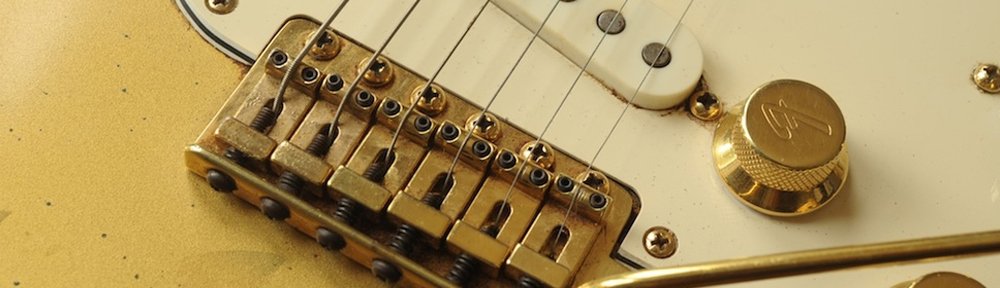
I play a lot of jazz on a Stratocaster. A pink Paisley one, no less. Which probably breaks expectations before a note is even played.
For many people, jazz guitar still carries a very specific image: big hollow body, dark tone, neck pickup, highs rolled off, one carefully controlled sound maintained all evening. And there’s nothing wrong with that sound. It’s beautiful. It’s part of the history. But lately I’ve been wondering whether we sometimes confuse tradition with necessity. Because when you think about what jazz actually is, the Strat starts to make enormous sense.
Jazz, at its heart, is conversation. It’s listening. Reacting. Leaving space. Changing direction in response to what someone else just played.
When that’s happening, sound can’t stay fixed. It has to move. One of the reasons I disappear for hours when playing my Strat is that it constantly asks for engagement. I’m always on the volume and tone controls, shifting colour, softening attack, swelling chords, brightening or thinning the sound depending on what I hear around me.
From a warm whisper to something close to a scream — all without changing guitars, pedals, or settings. Just touch and attention.
The clarity of a Strat does something important for jazz harmony too. Chords don’t blur. Extensions remain audible. Inner voices speak.
Instead of becoming a block of sound, harmony keeps breathing. It feels closer to a piano than to the traditional idea of jazz guitar thickness. And rhythmically, the immediacy of the attack makes time feel alive. Small differences in touch suddenly matter. Placement matters. Intent becomes audible. The guitar responds instantly — which means you have to listen instantly.
Historically, the darker jazz guitar sound made perfect sense. Early amplification demanded control and blend. Guitars needed to sit safely inside acoustic ensembles. But those practical limitations are gone. What remains is expectation. And expectation can be stubborn.
The longer I play, the less interested I am in making instruments imitate one another. A Stratocaster doesn’t need to become an archtop. Its strength is responsiveness, transparency, and movement. Tone becomes part of improvisation itself rather than a fixed identity established before the first tune. From an expressive point of view, that might make it one of the most complete jazz instruments available.
So yes — I play jazz on a pink Paisley Strat. Once the music starts, nobody seems to care what the guitar is supposed to look or sound like. They just listen.
Which, when you think about it, is the whole point.
Little Sunflower by Freddie Hubbard has been my focus this month.
I’ve been part of Matt Warnock’s online jazz study group for a number of years now. Each month we work on a different tune, and at the end of it we submit a performance for feedback—from Matt and from other players in the group. It’s a great process. There are musicians from all over the world involved, and over time you really start to hear how people develop. February’s tune was Little Sunflower by Freddie Hubbard. I love this tune, and I didn’t just want to play the tune from the lead sheet. I wanted to bring something of my own to it.
Depending on how you look at Little Sunflower, the harmony allows D and A to sit almost like drone tones throughout. That became the starting point. I set up a series of drones with swells and stutters, letting them evolve using delay, reverb and tremolo. The oscillation isn’t locked to the tempo—it moves independently—and I like what that does. It adds a sense of movement underneath everything, without being tied down.
I recorded the drones using my looper with an “empty loop” technique, then shaped them further with effects. In places I drop them out completely, just to let the piece breathe.
Everything was recorded in my little room at the end of the house—my music room. Guitar and bass are both me. The drums were part of a backing track provided by Matt for the month’s study (see my article on AI stem separation for more). I wanted to keep the whole thing fairly minimal, real, and feel like a band performance.
The arrangement grew quite naturally. The intro is made up of short chord punches that hint at the B section before moving into the full head. I play the melody in a few different ways—single line and with different harmonies—as this is something I’m submitting to my peers, so I wanted to explore that side of it a bit more.
After that there’s a solo over the form, with each A section getting a slightly different bass treatment. For the head out, the bass takes the melody. When the B section comes around, it starts in a more familiar way, then shifts—first into two-bar phrases, then into one-bar phrases. At that point it starts to feel less like a melody and more like a bass line, which opens things up for a kind of ride-out solo.
Right at the end, bass and guitar come together on the shortened B section.
I recorded and mixed everything myself. The final step was to do the live guitar take with video—one take, no overthinking—and that’s what you see here, and what I submitted.
I’ve built a bit of a reputation in the group for trying different things—textures, sounds, approaches—and for me that’s where the interest is. Just playing the tune as it sits on the page isn’t enough. I think we have to bring more of ourselves to it, and in my case that includes using technology as part of the process, not as a gimmick but as a way of shaping the music.
After submitting this, Matt shared some really kind words about it, which meant a lot given the level of players in the group and how long I’ve been part of it:
“Serge just posted his Little Sunflower Final Project, and it’s a beautiful example of what steady, patient growth can look like over time.
His playing has taken a big step forward. More atmosphere. More intention. More storytelling in the music.
For this project he didn’t just play the tune. He built an environment around it… It’s creative. Thoughtful. And very musical.
One of the things I love most is how Serge keeps experimenting… That curiosity is where real musical growth happens.”
That idea of steady growth, and staying curious, is really what this is all about. I hope you enjoyed it.
In 2024 alone, producers used AI tools to split more than 5,599,384 stems from tracks, which tells us one thing very clearly: this is not a gimmick anymore, it is how people are really remixing and practicing now.
Key Takeaways
Question
Short Answer
What is AI stem separation for remixing and practice?
It is the process of using AI to split a song into stems like vocals, drums, bass, and instruments so you can remix or practice more easily. We then shape those stems with the kind of human focus we talk about in our article on mixing to the musician.
Is AI stem separation good enough for serious mixing work?
Yes, modern models reach state of the art quality, and then proper mastering, as outlined in our mastering guide, can take separated stems to a professional finish.
How can AI stems help me practice my instrument?
You can mute or reduce your own instrument stem and play in its place, just like the way jazz players build solos step by step in our jazz soloing piece.
Can I create DIY backing tracks from my favorite songs?
Yes, AI tools can pull out vocals, drums, bass, and more so you can build custom backing tracks and even full practice albums, similar in spirit to our own Friday’s Child album project.
Is AI stem separation only for EDM and pop remixes?
Not at all, it works for blues, rock, and jazz too, which is why we love hearing classic players like Wes Montgomery through a modern AI workflow.
Do I still need mixing and mastering skills if AI is doing the separation?
Absolutely, AI gives you clean parts, but human taste and judgement are what shape a compelling mix and master, which is the core message across our articles in the Jazz ‘n’ Music section.
1. What AI Stem Separation Actually Is (In Plain Language)
AI stem separation is simply using machine learning to pull apart a full mix into individual elements like vocals, drums, bass, guitars, keys, or even ambience and noise. Instead of begging for the original studio stems, you upload a song file and let the model guess what belongs where, based on millions of patterns it has already learned.
For working musicians and hobbyists, that means you can treat any finished track like a multitrack session again. You get control where you had none, whether you are building a remix, making a practice loop, or just trying to work out what the bass player is actually doing in bar 17.
From full mix to usable parts
Most tools start with the basics, so at minimum you usually get a vocal stem and an instrumental stem. The better platforms go further and split into drums, bass, guitars, piano, and more, which is where things get really useful for both practice and production work.
Modern models reach state of the art quality and use objective metrics like SDR (signal to distortion ratio) to measure how cleanly they separate stems. AudioShake, for example, quotes a vocal model SDR of 13.5 dB on the MUSDBHQ benchmark, and that level of performance is already very workable for serious remixing.
Why this matters to “ordinary” musicians
Most of us do not have access to original studio sessions. For decades we were stuck with stereo mixes and our ears, and if the vocal was too loud or the drummer was washing everything with cymbals, tough luck.
AI stem separation cracks that problem open for the rest of us. It gives the kid in a bedroom, or a veteran player practicing for a gig, the sort of access that only mixing engineers used to have.
2. How AI Stem Separation Works Behind The Scenes
You do not need to be a data scientist to use AI stems, but understanding the rough idea helps you choose tools better. In simple terms, the model has listened to a huge amount of labeled audio and has learned what drums “look” like, what vocals “look” like, and so on, in a very high dimensional space.
When you feed a new track in, it tries to reconstruct the song as a combination of these learned sources. If it has been trained well and is using enough compute, it can get surprisingly close to studio-quality stems, even from a single stereo file.
Quality vs compute: why some tools sound better
On the technical side, newer models like Perseus have improved vocal extraction quality by about 15 percent over older versions like Orion, at the cost of using 3.5 times more resources. That trade off is typical: better separation usually means more computation, which might mean longer processing times or higher subscription tiers.
Some platforms cover as many as 17 or more separate stems, which is great if you want fine control of every element. Others focus on doing fewer stems really well, for example just vocals and instruments, or voice and noise for podcast cleanup.
Why benchmarks and SDR scores matter
Benchmarks such as MUSDB18 HQ or MUSDBHQ give us a common way to compare tools. A model like BS-RoFormer, with an SDR average of 11.99 dB on MUSDB18 HQ, is already competitive, but when you see claims like “Music AI SDR score is 15.8 percent higher than the nearest competitor on average,” that tells you separation is improving fast.
For practical work, the real test is always your ears. Numbers help you pick a starting point, but you still need to listen in context, then decide how much cleanup you are willing to do in your DAW.
3. Why AI Stems Are Perfect For Remixing
Remixing used to mean either you had the official stems or you were wrestling with EQ tricks on a stereo file. AI stem separation changes that because any well mixed track can become raw material, almost like a demo session delivered late at night to your laptop.
In 2024, the most commonly extracted stems were vocals, instrumentals, and drums, which lines up exactly with what remixers reach for first. Strip the drums out, rebuild a groove, keep the vocal, and you are already halfway to something new.
Common remix workflows with AI stems
Pull the vocal stem out and write completely new harmony and chords under it.
Mute the original drums, program your own kit, and keep only the bass and vocal.
Flip things on their head and remix using only the drum and bass stems as a starting loop.
Because platforms like Music AI process over 2.5 million minutes of audio per day with a 99.90 percent uptime guarantee, turnaround is usually quick enough that you can experiment freely. You upload, download the stems, and you are already in the DAW world that we know from traditional sessions.
A 5 step AI stem remixing process
A 5-step guide to using AI stem separation for remixing and practice. Learn how stems are isolated and recombined to speed up workflows.
Our own approach for a remix is usually:
Pick a track with a vocal performance that moves you, not just a popular chart tune.
Separate into at least vocal, drums, bass, and “other”.
Audition each stem on its own, listen for artifacts, and clean with EQ or gating where needed.
Rebuild the groove or harmony around the vocal or another focal stem.
Mix with the same care you would give to real session stems, then master at the end.
Did You Know?
Music AI reports a 15.8% higher SDR score than its nearest competitor on average, which means noticeably cleaner stems for your remixes and practice tracks.
4. Building Practice Backing Tracks With AI Stems
For many of us, the real magic of AI stem separation is not the flashy remix, it is the simple ability to practice with the band we always wanted. You can mute your instrument in the mix and sit where that player used to sit, which is a brilliant, slightly terrifying, way to see what you can really do.
Guitarists can pull out the guitars and comp or solo over the original rhythm section. Drummers can remove the drum stem and play along with the intact bass, keys, and vocals, which is very close to a live rehearsal scenario.
Instrument specific practice ideas
Guitar: Remove guitars, loop tricky sections, slow down in a DAW, and study phrasing against the original vocal.
Bass: Solo the bass stem to transcribe, then mute it to test your own line with the drums and harmony.
Drums: Isolate drums to learn fills and ghost notes, then mute to practice your own grooves under the same song.
Vocals: Solo the vocal stem, work on timing and pitch, then sing against the instrumental stem.
This is particularly powerful when you approach soloing the way we describe in our jazz material: making more of what you already do, instead of hunting for magic scales. With stems, you can live in the pocket of a great rhythm section for hours, which is where real progress hides.
Turning albums into practice libraries
Once you get into the habit, you start thinking in albums, not tracks. Entire releases, like our own Friday’s Child, can be turned into structured practice sets where you have clear stems for rhythm, harmony, melody, and solos.
It is the sort of thing that, in the past, only education publishers did with very controlled multitracks. Now you can quietly build your own library at home and work through it at your own pace.
5. Practice Routines Using AI Stems (For Real Life Schedules)
We know what it is like to juggle work, gigs, and training on the bike. Fancy tools are useless if they do not fit into a messy day, so here are simple, repeatable ways to use AI stems without needing a spare lifetime.
The key is to keep things narrow: one song, one weak spot, one short loop, repeated often. AI does the heavy lifting of separation, you just show up and do the reps.
30 minute guitarist routine
5 minutes: listen to the original track once, no guitar in your hands.
10 minutes: loop a verse and chorus with the guitar stem soloed, and quietly sing or tap the rhythm of the part.
10 minutes: mute the guitar stem and play along, recording yourself on your phone.
5 minutes: compare your take against the original guitar stem and make one note for tomorrow.
For bassists and drummers, you can use exactly the same timing but swap which stems you listen to or mute. Vocalists can create A/B loops between the original vocal and their own take against the instrumental stem.
Longer weekend sessions
On days where you have more time, AI stems let you go deeper without getting lost in tech. You can separate a whole album in advance, label stems clearly, and then run longer play along sessions, switching songs while keeping your focus on one concept like time feel or phrasing.
It is the opposite of gear chasing. Once the stems are ready, all you are left with is you, your instrument, and the band that used to live only inside the stereo mix.
Did You Know?
LALAL.AI users uploaded 9.7 million files in 2024, fueling a huge wave of custom remixes and practice tracks built from AI-separated stems.
6. Mixing AI Stems So They Actually Sound Musical
Once you have your stems, the job is not finished, it is just familiar again. You are back in the world of levels, EQ, compression, and, most importantly, the human behind the performance.
In our own work, we always go back to what we call mixing to the musician. Two vocal stems might have the same frequency curve, but one singer is fragile and the other is bold, and they need different treatment if you want the mix to feel honest.
Cleaning up AI artifacts
Even the best models will leave you some work to do. You might hear light bleed from drums in a vocal stem, or a bit of the bass still living in the guitars, especially in dense mixes.
Typical fixes include:
Narrow EQ cuts on obvious bleed frequencies.
Noise gates or expanders on percussive or vocal stems.
Short fades around edits to avoid clicks, especially when looping sections.
Balancing stems like a normal session
After cleanup, you mix as you usually would. Set a solid rough balance, work on the drums and bass relationship, fit the vocal in, then decorate cautiously with effects.
We like to think of AI stems as being like a slightly messy live multitrack. If you maintain that mindset, you focus on musical problems instead of chasing technical perfection that does not really matter to anyone listening.
7. Mastering Tracks That Started From AI Stems
Once a mix feels right, mastering is still essential, no matter how clever the separation stage was. AI does not change the basic truth that mastering is about consistency, translation, and a sensible final polish.
As we explain in our mastering article, the goal is to have a track that sounds balanced and confident on phones, cars, cheap speakers, and a good studio system. AI stems can give you a great mix, but they will not make that last ten percent of finishing decisions for you.
Specific mastering checks for AI stem projects
Low end coherence: Make sure any slight separation smear between kick and bass has not turned into a muddy low end.
Top end harshness: Check that any AI artifacts have not left a “hiss” in the 8 kHz to 12 kHz range.
Phase issues: When stems are recombined, always check mono compatibility, especially with drums and wide guitars.
Loudness is a creative choice, but AI does not get you a free pass there either. We still recommend leaving enough headroom and dynamic range so the track can breathe, even if streaming platforms will normalise it later.
8. Top AI Stem Separation Use Cases For Working Musicians
We see AI stem separation showing up in all sorts of practical, slightly unglamorous ways, which is usually a good sign that a tool is genuinely useful. It is not just bedroom producers, it is teachers, cover bands, and even people preparing for radio or streaming features.
Here are some of the most common use cases we encounter when talking with other musicians.
Everyday uses
Cover band prep: Create key shifted, instrument specific backing tracks for live sets.
Teaching: Build slow, instrument focused versions of songs for students to practice.
Content creation: Prepare short stems for reels or YouTube breakdowns without needing the original session.
Archiving: Pull elements out of old demos and rework them with new arrangements.
For radio features or online premieres, AI stems allow you to make alternate mixes quickly, for example a more voice forward version for spoken intros. When we hear our own tracks on stations or playlists, we are very aware that flexibility counts.
Genre specific workflows
Jazz players might focus on rhythm section stems to study comping under solos. Blues and rock guitarists might live mostly in vocal and guitar stems to pick apart phrasing and bends from players like Peter Green.
Electronic producers might only care about drums and melodic hooks, using AI stems to resample and reshape loops into something completely unrecognisable from the source.
9. Limitations, Legal Questions, And Good Habits
AI stem separation is powerful, but it is not magic, and it does not remove your responsibility to think. There are technical limits and legal questions that every musician should at least be aware of.
On the technical side, extremely dense mixes, live recordings, or tracks with heavy effects can still confuse models. You might get more artifacts or bleed, and sometimes it is genuinely quicker to pick a cleaner song.
Legal and ethical points
We are not lawyers, so we will not pretend to offer formal advice here, but some broad principles are sensible:
For private practice, pulling stems from commercial tracks is generally low risk, and similar to playing along with a record.
For commercial remixes or releases, you still need the relevant permissions or licenses, regardless of how you got the stems.
For teaching content, many creators work under fair use or similar concepts, but local laws differ, so it is worth checking.
Ethically, it helps to remember there is a person behind every performance, just like we write about in our mixing article. Respect for that person’s work should guide how loud you shout about your AI separated stems in public.
10. Choosing An AI Stem Separation Tool That Fits You
There are plenty of tools out there, and new ones keep appearing, but you do not need to overthink it. Start with what you actually want to do, which is usually remix tracks, build practice material, or clean up audio for teaching and content.
Key questions to ask yourself include how many stems you need, how patient you are with processing times, and whether you want a web tool or something that runs inside your DAW.
Features that matter in daily use
Stem count: Do you just need vocals and backing track, or do you want drums, bass, guitars, keys, and more?
Quality: Look for clear examples and, if possible, references to benchmarks like SDR or independent tests.
Speed: Daily throughput numbers such as “2.5 million minutes per day” hint at how scalable a platform is.
Workflow: Simple export options into your DAW, clear file naming, and stable uptime all save you time.
Remember that you can always change tools later. The bigger decision is not which brand you pick, it is whether you commit to using AI stems as a regular part of how you practice, remix, and learn.
Conclusion
AI stem separation for remixing and practice is not science fiction anymore, it is just another tool in the bag, like a decent compressor or a metronome that does not argue. Millions of files and stems processed each year prove that ordinary musicians, teachers, and producers are already using it quietly in the background.
From our point of view, the real value is simple. AI helps you hear more clearly, gives you better material to work with, and then gets out of the way so you can do the one thing it still cannot do, which is to sound like you.
I was lucky enough to get paid to play a recording session yesterday at a local studio here in France, for visiting American songwriter and producer Dana Walden.
If anyone would like to know more — how I got the work, how I prepared, what gear I took, how it actually went — please ask and I’ll do my best to answer. Needless to say, it was a fabulous day, and I consider myself very fortunate.
There were two key takeaways I wanted to share:
1. You must be able to play in all keys. I had to play a song in three different keys straight off, to find which suited the singer best. Luckily it was a simple pop song, but the ability to move freely between keys was essential.
2. Ear training pays off. Dana wanted a short guitar intro and asked me to play him some ideas. He liked a couple of things I played. Then he sang a line to me and asked me to play it back. I was so glad I had worked through those ear training exercises.
How it went…
I met Dana the day before. He wanted to meet and talk through the project, and he was really nice, so I didn’t feel nervous. We were only recording one tune that day — just him, the chanteuse, and me.
Knowing the song ahead of time meant I was able to work out some nice chord voicings and pathways, while still leaving plenty of scope to improvise. Dana was clear about what he wanted and told me when he liked something and wanted more of it.
Style-wise, I’d assumed it was going to be jazzy — that’s why the woman who booked me had booked me — but Dana wanted a more pop approach.
On the day, the engineer was set up and ready when I arrived. I sat in the control room and plugged straight into the desk, playing to a drum track with some piano parts the producer had prepared that morning. I played from the notes I’d made the day before, while Dana sang a placeholder vocal and conducted me through the arrangement.
I put down a couple of takes using different ideas. When the singer arrived we had a few more run-throughs, then the producer asked me for a final take — just embellishments and fills. After a couple of hours, my work was done. The rest of the session belonged to the singer.
One small thing I hadn’t anticipated: I’m used to a two-bar count-in, but the studio DAW was set up for just one bar. That caught me out on the first take! Afterwards I found myself thinking about how much studio time that must save over the course of a few months.
Hopefully I’ll get a copy of the finished track when it’s done.
How I got the gig…
I’m not a working professional musician. Being a professional musician in France is complicated — the rules are quite something. On paper, I’m retired.
I got this gig by being in the right place at the right time. I’d done a short gig with Lyda, my Dutch opera singer friend, and the woman who booked me happened to be in the audience. She loved what we did and got in touch — she was looking for a guitarist, she liked what I played, and she showed some of my YouTube videos to the producer. He thought I was worth a try. I was halfway there before the session even began.