“A lot of people think that your’e playing like bass notes at the same time your’e playing chords at the same time your’e playing melody, and it’s not like that. It’s an illusion. Your’e playing a bass note sometimes your’e playing a chord sometimes your’e playing the melody most of the time and your’e filling. So it’s all done by doing something with motion. If you try to play a bass note on the chord on every beat, you’d be working for 8 months on one song and then once you learn it, thats the only way your’e gonna play it.” Joe Pass
I had to let that sink in a while…..
Category Archives: Jazz & Music
Is Jazz old peoples music?
No, jazz is not just old people’s music. While jazz has its roots in the early 20th century and was popularized by musicians such as Louis Armstrong, Duke Ellington, and Charlie Parker, it continues to evolve and be relevant today. Jazz has influenced and been influenced by other genres such as rock, hip hop, and electronic music, and continues to attract young audiences and new artists. There are many contemporary jazz musicians who are creating innovative and exciting music that appeals to people of all ages. Therefore, jazz is not just old people’s music, but a vibrant and diverse genre that continues to evolve and inspire new generations of musicians and fans.
Well then, do you have to be old to play jazz?
No, you do not have to be old to play jazz. Jazz is a genre that can be played by musicians of any age. Many great jazz musicians started playing at a young age, such as Wynton Marsalis, who started playing trumpet at the age of six, and Esperanza Spalding, who began playing bass at the age of 15. There are also many young jazz musicians who are making a name for themselves today, such as Joey Alexander, a pianist who gained recognition when he was just 11 years old. While jazz has a rich history and many legendary figures who were active in the genre in the past, it is also a genre that continues to attract and inspire new generations of musicians, regardless of their age.
So, how is jazz doing, as a genre?
Jazz continues to be an important and thriving genre of music. While it may not receive as much mainstream attention as some other genres, it has a dedicated and passionate following around the world. Jazz festivals continue to draw large crowds, and there are many clubs and venues that specialize in jazz music.
In recent years, jazz has also been experiencing a resurgence in popularity among younger audiences, as more and more young musicians are incorporating jazz elements into their music. Jazz has also been embraced by hip hop artists, who have used jazz samples and instrumentation in their music.
In terms of the industry, jazz has faced some challenges due to the decline of physical album sales and changes in the way people consume music. However, many jazz musicians have adapted to these changes by finding new ways to connect with audiences through live streaming, social media, and other digital platforms.
Overall, jazz may not be as prominent in the mainstream as some other genres, but it remains a vibrant and important part of the music world, with a dedicated following and a bright future ahead.
Friday’s Child Album
Six years ago we released this album. We had such great fun making it. If you didn’t catch it first time around, here’s your chance.
Our first album together!
“Each day we went into the studio with an idea, a notion, a catalyst. We emptied our minds and prayed that the Gods of music might express themselves through us”…
This album is dedicated to the glory and majesty of mother earth
Recorded in France 2016. all rights reserved.
Feedback…..
John – Interesting, diverse, mesmerising and most of all extremely listenable. Loved the way the cultures mix and blend superbly on Go-Go-11. That bluesy Stay in bed is a great tune and beautifully handled, however, the best gem amongst all has to be for me, FNIK, that’s awesomely good.
Peter Jezukiewicz Fab album with lots of great ideas and playing.If you start running production coaching courses I’ll sign up!
Steve Trotter – It’s very well recorded….. the content wasn’t what I expected !!! Nevertheless I can hear the work that has been put in to produce such varied tracks … chapeau BenBros for an interesting musical voyage. Hints of Ravi Shankar …Cream …. Al Jarreau …. Alain Caron.
Piers Lane Only had opportunity to listen to the Bhangra track so far. Love it – good drum/percussion sound and lovely freedom to it. Reminds me of Afrocelt Sound System in terms of rhythm/vocals (tho of course different culturally!). Good stuff.
Ernest Taylor What a super eclectic mix of tracks, Steve – very well performed and recorded. Hats off to you and your Bro.
credits
released April 1, 2017
We give thanks to the following musicians for their inspirational contribution….
Madamne Blanc, Tina Chachevski, Rev’ Dave Seward, Serge Baudot, Vihaan Nair, Tim Bragg, The Immaculated Imitators .
What Jazz is…..
“That’s all jazz ever is, you set an intention for a tune, get into that vibe, and see where it leads you.” Matt Warnock
Wayne Shorter’s Footprints – cover version
Wayne Shorter’s ‘Footprints’ was the tune of the month in Matt Warnock’s Jazz study group. This is my end of the month submission for feedback.
On Matt’s suggestion from last month I switched my focus from technical to musical items. So rather than use x scale and y arpeggio, I used a different idea for each chorus.
As Matt says, “Scales and arpeggios are a means to an end, if you keep focussing on the means, you’ll always play in a technical way. If you focus on what those means can do for you, create musical ideas, then your focus is on the end result, making music.”
“The word ‘jazz,’ to me…only means ‘I dare you.” Wayne Shorter
I played in Em so that I could use open strings. To a drum pattern that I found while practicing to random drum beats on my looper (something I do quite often). I tried to use a theme for each chorus. This was the first and only take after setting up levels. I like this tune a lot……another great month. Thanks Matt.
0:00 Chords
0:37 Melody
1:11 Melody + Ornaments
1:45 4ths
2:19 Single String
2:45 Bend + Tap + face 😉
3:40 Patterns ala Bickert
4:03 Just play *2
5:15 Chords
5:48 Melody + Ornaments
6:26 Out
Matt Warnock on soloing…..
As you go forward with soloing, switch your focus from technical to musical items. What I mean is, rather than say, “I used x scale and y arpeggio,” say “I used a 3-note idea from the melody and then developed it using rhythms, articulation, and dynamics.”
Scales and arpeggios are a means to an end, if you keep focussing on the means, you’ll always play in a technical way. If you focus on what those means can do for you, create musical ideas, then your focus is on the end result, making music.
Matt Warnock Feb 2023
Saw this on Matt’s ‘studio‘ website this morning. Thought is was worth sharing.
DOUG & JEAN CARN / “Infant Eyes”
“Most of us know that this music is profound; even apocalyptic at times. However, it is so often approached on such a casual social and commercial level, we tend to ignore and overlook the stirrings within our souls and the voices of our ancestral ‘spirits’ that remind us of the fact, that there is a revelation of certain prophetic dimensions inherent in this music.”–Doug Carn
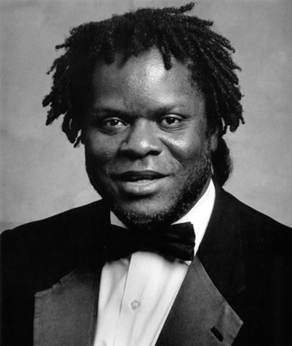
This is a songbook definition of classic. Uno: the whole album is great. Two: Doug Carn’s arrangement and the musicianship are first rate. Tatu: the lyrics are poetry. Yet, all of that great goodness is surpassed by the job that Jean Carn does as the featured vocalist.
In the Fifties, Billie Holiday, Sarah Vaughan, Dinah Washington, Carmen McRae, Ella, and others following in their wake, mostly re-interpreted popular American songs: Tin Pan Alley, Broadway show tunes, and movie music. By the force of their creativity, they turned otherwise second-rate songs into standards. In fact, jazz musicians created the ‘standard.’
Then came the Sixties. A revolution. And of course the music was a hip reflector of the politics. Self determination. Jazz musicians wrote their own songs, not just new melodies fitted on top of pre-existing chord changes, as was the case with bebop and the morph from, for example, “Cherokee” to “Ko-Ko.” Under the influence of Trane, the object was not just to cover “My Favorite Things” but rather to express our own Love Supremes.
By the Seventies, we were bequeathed a body of original jazz music. Doug Carn’s genius was fitting lyrics to this new music. Additionally, this music was issued on the Black Jazz label, a self-determination effort of Black musicians to own and distribute their own music and not be dependent on the entertainment industry for production and distribution. The mid-Seventies were the high point of this social and musical movement. In the late Seventies and on into the early Eighties, Jean had a moderately successful career as a pop vocalist, but most of her subsequent recorded solo work is forgettable. And Doug never did come up with another vocalist to do what Jean does with his lyrics and arrangements. They needed each other to complete each other. Even though they both were talented, together they were exquisite. Elegant. But you know, disco wasn’t hearing none of that.
Anyway, it’s the combination of Doug’s lyrics and Jean’s vocals that makes this iconic early Seventies jazz record so moving.
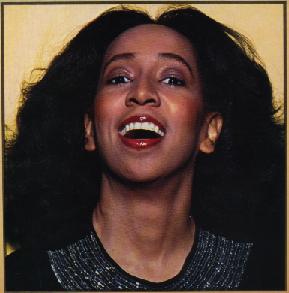
On the title cut, Jean’s breath control and dynamic range are astounding. So rich, so supple, this is the art of the jazz ballad: from expertly hit high notes to a hushed closing that is so tenderly voiced it could well be the last words of a mother who has just put her child to sleep. “Infant Eyes,” now a staple jazz ballad, is a Wayne Shorter composition. There are hundreds of recorded versions of “Infant Eyes,” however Doug and Jean Carn outshine them all. Listen. Just listen. And if you can get to the album, listen to everything (especially Michael Carvin’s drumming and George Harper’s tenor and flute work).
Remembering to Forget – My 2022 Album
For the past 4 years I have put out an album to document my musical adventures. Remembering to Forget is this years album. There’s a range of styles, however, all are heavily influenced by my study of jazz guitar with Matt Warnock. It’s his teachings, approach and creativity that I have put into practice here. I hope you like it.
Here’s some background for each track…..
Time to Think…
From an original idea by PatrickM. Because sometimes we need time to think, to reflect.
Argo Phosphine…
From time to time I get an invite from a local record label to submit a track for a compilation album. The brief –
Call for the « PHONOGRAPHIES » project
For the “Phonographies” project, each artist is invited to compose a sound or musical piece containing field recordings. The composition should contain recordings through samples or it may be a raw « one-shot » piece.
I insist on the fact that your composition must absolutely contain sounds recorded around you or in your sound banks: that is the point. This is what will make the link throughout the project.
There were storms at the time, and during the day there was acrid smoke from the forest fires 300kms away, and what seemed like the endless noise of jet engines. I wanted something relentless and disonant. I recorded the sound of the storms, also the sound of the frogs. I used pickscrapes for the sound of the jets. White noise from a flanger and various guitar sounds with the guitar is drenched in reverb and delay. Percussion from loops of unequal lengths and some ‘one shot’ sounds from an old recording. Argo Phosphine is an anagram of Phonographies.
Beseechingly Yours…
My tip of the hat to one of my favourite guitar players Derwin “Big D” Perkins.
Pocket Queen…
Taylor Gordon a.k.a Pocket Queen on Instagram. Every so often she posts a drum loop and invites musicians to do something with it. This is my attempt at one of those.
Infant Eyes – Wayne Shorter…
A cover of Infant Eyes. This was my Jazz study group’s tune of the month for July (https://www.mwgcourses.com/).
Juillet…
Simply a tribute to July making use of some tasty chord moves I’d learned in the jazz study group.
Remembering to Forget…
The title track. It’s a thing to do at the end of a serious practice session on guitar. Just forget everything and play…..but you have to remember to do that.
Andalusian Cadence…
Exactly that. Let the cadence do the work and play the least I can while making sure to hit the ‘meaningful’ notes.
La Belle Riviere Gorre…
Another one for the local record label to submit a track for a compilation album. The brief –
Call for “CARTES POSTALES” project
(Based on the idea of Argentinean artist Carlos Devizia)
Each artist will have to choose one of the most beautiful natural places in the world for them. They will compose a sound (or music) piece inspired by that place.
We at Camembert Électrique believe that there are so many beautiful places in our world, that they deserve to be honoured musically.
I chose one of my very favourite places. The River Gorre near Saint Auvent. Just a stones throw from where I live. I walk there often and I find it to be a magical place. I make a point of stopping to just watch the river flow for a few minutes.
Authentic Brazilian Samba/Bossa Guitar comping
The ‘Tune of the Month’ in Matt Warnock’s Jazz study group is So Danco Samba. Matt has given us authentic Bossa and Samba patterns to learn, but I wanted to try and take my comping to the next level and make it sound even more authentic. I listened to the Jobim version, also the Getz/Gilberto version along with a whole playlist of others. Then I decided to try and find a Brazilian who could teach me. After a few minutes on google I found Diego Figueiredo and his ‘Brazilian Jazz Guitarra‘ course on Truefire.com. I watched a free video where he taked about the Bossa Nova Jazz connection. In the free vid’ he demonstrated what he was talking about by playing So Danco Samba – result! He gave some great tips and ideas. I was so impressed I wanted to find out what else he had to say.
Diego Figueiredo is one of the greatest guitarists I’ve seen in my whole life. The world needs to listen to his music.” – George Benson
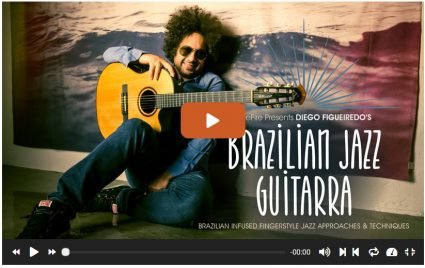
From Truefire…..
Diego is also a passionate educator, and we’re very excited to welcome him to the family with his first TrueFire course, Brazilian Jazz Guitarra!
”I love the ‘magica’ — the magic of bossa nova and the freedom of jazz. Combining these two influences produces a colorful, vibrant style that I call Brazilian Jazz Guitarra. In this course, I’ll share 12 key concepts and techniques that power this exciting style. We’ll apply all 12 of those approaches across seven performance studies in different feels and tempos.”
Diego organized the course in two sections. In the first section, Diego shares 12 key concepts and techniques that are signature to his style: Bossa Nova Swing & Variations, Traditional Brazilian Music Styles, Right Hand Fingers & Approach, Right Hand Patterns & Variations, Right Hand Arpeggio Exercises, Up & Down Thumb Technique, Chord Substitution Ideas, How to Play With a Singer, The Bossa Nova & Jazz Connection, Explore the Scales Inside Chords, Inside vs. Outside Melodies, and The Importance of Repertoire.
Needless to say, I bought a copy of the course and am enjoying it very much. I have a few days left until I submit my final project for the month. I hope to share that with you.
Here’s a link to Diego’s course Brazilian Jazz Guitarra.
Footprints – Wayne Shorter
The weather has been grim. It’s been raining for days. More guitar time then! On the Strat-Talk forum where we discuss all things stratocaster there is a weekly challenge that I sometimes join in with. This week’s challenge was to record oneself playing over a backing track for Wayne Shorter’s Footprints. I liked the sound of of it, and decided to gve it a go.
I spent a happy morning teaching myself the melody by ear then recording this…..
Here’s what we have….
Drums intro, 4 bars keyboard turnaround, 2* Melody, 4 choruses improvisation, 2* Melody, 2*tag, outro.
I recorded using a 1967 ‘Chet Atkins’ Gretsch Country Gentleman – also know as the George Harrison guitar, through a DV Mark Little Jazz amplifier into Ableton Live. The backing track was posted by Monte over on strat-talk. Here’s the challenge thread in case you fancy having a go, or checking out what other players made of it.
A great morning on the guitar learning about a tune that I was not familiar with. What you been up too?
“Footprints” is a jazz standard composed by saxophonist Wayne Shorter and first recorded for his album Adam’s Apple in 1966. The first commercial release of the song was a different recording on the Miles Davis album Miles Smiles recorded later in 1966, but released earlier. It has become a jazz standard.