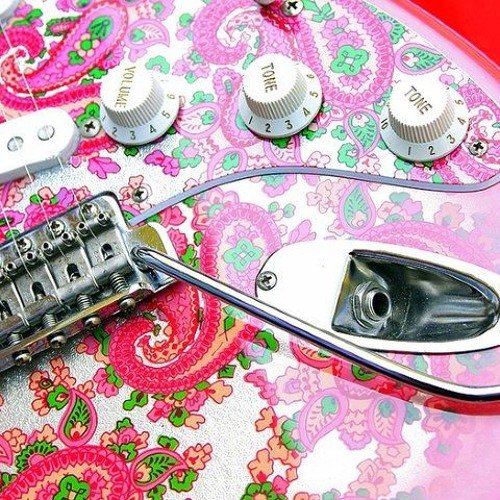
A paid recording session…


I was lucky enough to get paid to play a recording session yesterday at a local studio here in France, for visiting American songwriter and producer Dana Walden.

If anyone would like to know more — how I got the work, how I prepared, what gear I took, how it actually went — please ask and I’ll do my best to answer. Needless to say, it was a fabulous day, and I consider myself very fortunate.

There were two key takeaways I wanted to share:

1. You must be able to play in all keys. I had to play a song in three different keys straight off, to find which suited the singer best. Luckily it was a simple pop song, but the ability to move freely between keys was essential.

2. Ear training pays off. Dana wanted a short guitar intro and asked me to play him some ideas. He liked a couple of things I played. Then he sang a line to me and asked me to play it back. I was so glad I had worked through those ear training exercises.

How it went…

I met Dana the day before. He wanted to meet and talk through the project, and he was really nice, so I didn’t feel nervous. We were only recording one tune that day — just him, the chanteuse, and me.

Knowing the song ahead of time meant I was able to work out some nice chord voicings and pathways, while still leaving plenty of scope to improvise. Dana was clear about what he wanted and told me when he liked something and wanted more of it.

Style-wise, I’d assumed it was going to be jazzy — that’s why the woman who booked me had booked me — but Dana wanted a more pop approach.

On the day, the engineer was set up and ready when I arrived. I sat in the control room and plugged straight into the desk, playing to a drum track with some piano parts the producer had prepared that morning. I played from the notes I’d made the day before, while Dana sang a placeholder vocal and conducted me through the arrangement.

I put down a couple of takes using different ideas. When the singer arrived we had a few more run-throughs, then the producer asked me for a final take — just embellishments and fills. After a couple of hours, my work was done. The rest of the session belonged to the singer.

One small thing I hadn’t anticipated: I’m used to a two-bar count-in, but the studio DAW was set up for just one bar. That caught me out on the first take! Afterwards I found myself thinking about how much studio time that must save over the course of a few months.

Hopefully I’ll get a copy of the finished track when it’s done.

How I got the gig…

I’m not a working professional musician. Being a professional musician in France is complicated — the rules are quite something. On paper, I’m retired.

I got this gig by being in the right place at the right time. I’d done a short gig with Lyda, my Dutch opera singer friend, and the woman who booked me happened to be in the audience. She loved what we did and got in touch — she was looking for a guitarist, she liked what I played, and she showed some of my YouTube videos to the producer. He thought I was worth a try. I was halfway there before the session even began.

Achievements 2025

70 Years Old
2025 was a milestone year for me as I turned 70. One minute I was 15 and couldn’t even imagine being 21, and now here I am. Happy to be here and considering myself lucky considering some of the tricks I used to get up to. I’m still mostly in tact. Still riding my bike, and playing my guitar and enjoying life. What more could I ask?

10,000 kms ridden
I had set myself the goal of cycling 10k kilometers this year, and I did it with three weeks to spare. I have to say that I enjoyed every pedal turn. Spring and autumn were best. The Haute Vienne is so beautiful then. I go out on my bike and the fairies put me under a blissful spell which is only broken by the realization that I am under a spell.

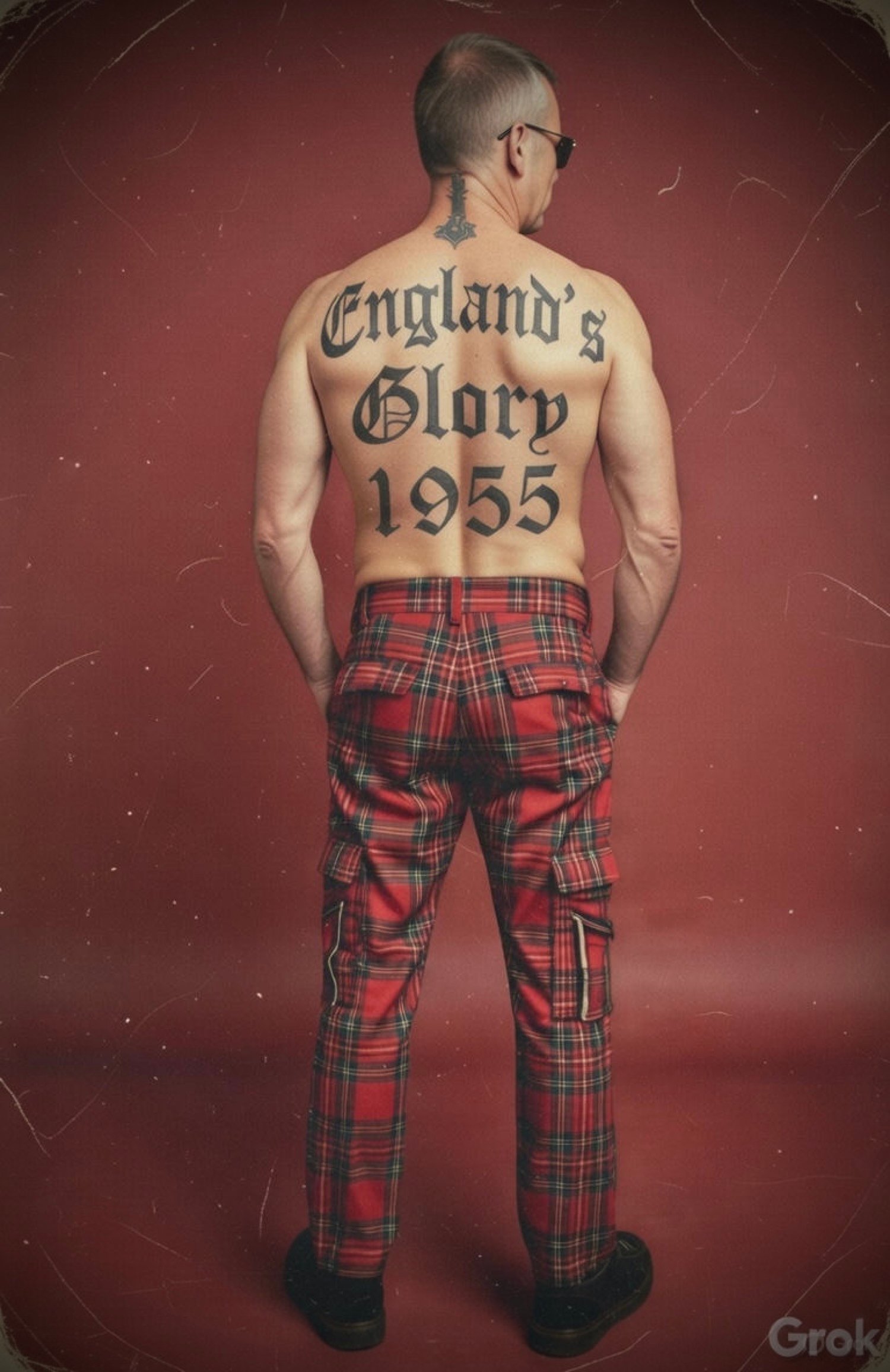
Full Back Tattoo
I finally got that full back tattoo I’ve always wanted. I used to go to the swimming baths in Brierley Hill in my young teens. There were some young men there who could do amazing dives from the top diving board. They could swim fast. Some of them had tattoos. I was in awe of them. I wanted to be one of them. One in particular had a full back tattoo. I decided that one day I would have one too.
I thought about it in my early 20s, but never got round to it. Again as my 40th approached I thought of it. Even asked an artist I knew if they would create a design for me. They didn’t!
Same again when I was 60. And now, for my 70th I finally got it done. Thanks Grok! 🙂

Full Back Tattoo - Englands Glory 1955

Happy New Year everyone! May 2026 be your best year ever.

Mixing to the Musician: The Art of Sonic Personality

I’ve done a lot of mixing over the last 40 years. It’s something I have studied, something I have a qualification in. After four decades behind the mixing desk, I’ve come to realize that the most crucial skill isn’t knowing which frequency to boost or cut—it’s learning to hear the person behind the performance.

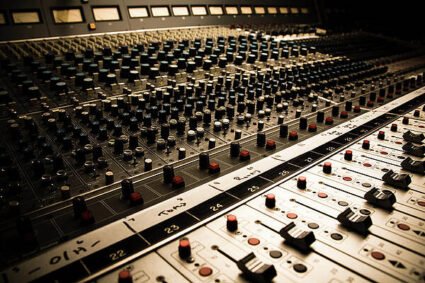
Mixing desk

Beyond the Technical Checklist

Every mix starts the same way: import the stems, clean up the noise, set levels, apply EQ. But somewhere between the mechanical cleanup and the final bounce, something more nuanced happens. You stop mixing instruments and start mixing musicians.

Take two guitarists playing identical Les Pauls through the same amp. The frequency spectrum might look similar on paper, but their sonic fingerprints are completely different. One player might have a aggressive pick attack that needs taming in the upper mids, while another’s lighter touch might need some presence boost to cut through. It’s not just about the gear—it’s about the human touching that gear.

The Personality in the Performance

Every musician brings their own physical relationship to their instrument. The drummer who hits slightly behind the beat versus the one who’s always rushing. The bassist who digs in with their fingers versus the one who floats over the strings. The vocalist who breathes audibly between phrases versus the one who barely makes a sound.

These aren’t flaws to be corrected—they’re the essence of what makes that performance unique. My job isn’t to make everyone sound the same; it’s to make each person sound like the best version of themselves within the context of the song.

“Essentially you’re creating a sonic portrait that honours both the musical context and the human element behind each performance.”

Context is Everything

This individual approach doesn’t happen in isolation. Genre matters. A jazz guitarist’s laid-back phrasing needs different treatment than a country picker’s crisp attack. The same Telecaster gets completely different EQ curves depending on whether it’s cutting through a dense rock mix or sitting in a sparse folk arrangement.

But even within genre conventions, individual personality trumps everything. I might start with my “rock guitar” EQ preset, but that’s just the beginning of the conversation, not the end.

The Art of Invisible Enhancement

The best mixing happens when you can’t hear the mixing. When a guitarist listens back and says “That’s exactly how I sound,” even though you’ve made dozens of subtle adjustments to get there. You’re not changing their sound—you’re revealing it more clearly.

This requires a different kind of listening. You have to hear not just what’s there, but what’s trying to be there. The intent behind the performance. The musical conversation happening between players. The emotion that might be buried under technical imperfections.

Learning to Hear the Human

Developing this skill takes time and, frankly, a lot of mistakes. Early in my mixing adventures, I treated every instrument like a technical problem to solve. Kick drum too boomy? Cut at 200Hz. Guitar too harsh? Notch out 3kHz. But music isn’t a series of technical problems—it’s human expression filtered through wood, metal, and electricity.

The breakthrough comes when you realize that the “problem” frequencies in one context might be the magic in another. That slightly nasal quality in a vocalist might be exactly what gives their performance character. That slightly loose snare hit might be what makes the groove feel alive.

“This kind of listening requires both technical knowledge and emotional intelligence. You have to hear not just frequency content and dynamic range, but intent, personality, and musical conversation between players. It’s why two mixers can use identical equipment and techniques yet produce completely different results.”

Still Learning After All These Years

What keeps this work engaging after four decades is that no two musicians are exactly alike. Each new project brings fresh challenges, unexpected combinations, and opportunities to discover something I haven’t heard before. The technical skills become intuitive, but the human element—that’s always evolving.

The day I stop hearing new nuances in how different people make music is the day I should probably call it a day. Fortunately, after 40 years of listening, I’m still as curious as ever about the person behind the performance.

The Bottom Line

Great mixing isn’t about perfect frequency response or flawless dynamics. It’s about understanding that every performance carries the DNA of the person who created it, and your job is to help that DNA express itself as clearly and powerfully as possible.

When you mix to the musician rather than just the music, something magical happens. The technical becomes artistic. The mechanical becomes human. And the final mix doesn’t just sound good—it sounds right.


What aspects of a musician’s personality do you hear in their playing? How do you approach capturing the human element in your own mixing work? Share your thoughts and experiences in the comments below.

Lament for the Beautiful One

This for the beautiful one.
That one in the picture.
My beautiful Princess.
What I wouldn’t give for one more day.
To walk with you.
To sit with you.
To touch you.
To bury my nose in the wonderful smell of you.
What I wouldn’t give.

I look for you.
I wait for you.
I think of you, and what I wouldn’t give.
My beautiful Princess Maya

DOOMED & STONED IN FRANCE (VOL. II)

Sorry if you were not aware yet, but France is not only the country of culture, champagne, tasty gastronomy, social rights and impetuosity (I made it short, you can complete the list… hahaha), for quite some years now it’s also a growing source of heavy and doomy sounds!

I hope, Volume 1 already proved to most of your ears this new solid trait ! Now I tried to push this volume 2 even further in terms of quality, diversity and with some nice surprises for the occasion (like a special comeback, songs in avant-premiere).

From doom/death to harsh sludge, while not forgetting stonerized or psychedelized stuff and naturally more traditional Doom spheres, you’ll get here a pretty dense and diversified inventory of the underground scene I’m succumbing for…

Now enjoy your journey in our tortured yet beautiful soundscapes and please SUPPORT our bands !

Steph LE SAUX 07/2023

The Beautiful One has left us…

It is with a heavy aching heart that I tell you that our beloved Princess has left us. She had been ill for a while. She started to go downhill really quickly. All too soon, she was gone. At least we were there to say goodbye….I held her in my arms.
She was twelve and a half years old. She had been with us for 11years. She had a good life. Wanted for nothing. We always put her first. We loved her. We miss her so much.

I hope that in time we will come to remember the good times, of which there were many. At the moment we are numb.

To Shave or not to Shave?

While I had my arm in a cast I stopped shaving as it was too difficult. I’ve had the cast off a couple of weeks now….arm getting back to normal. Now, do I shave or not….until spring?
Pendant que j’avais le bras dans le plâtre, j’ai arrêté de me raser car c’était trop difficile. Le plâtre a été retiré il y a quelques semaines maintenant… le bras revient à la normale. Maintenant, est-ce que je me rase ou pas… jusqu’au printemps ?
#hannahats

Doom and Gloom….

Stoner Doom in fact. My latest musical effort. I know you wanna hear it. Cooked up on a Sunday afternoon…..Fender Stratocaster straight into a Focusrite Scarlett, and thereby into Ableton Live with a Neural DSP Archetype Cory Wong plugin. Enjoy!